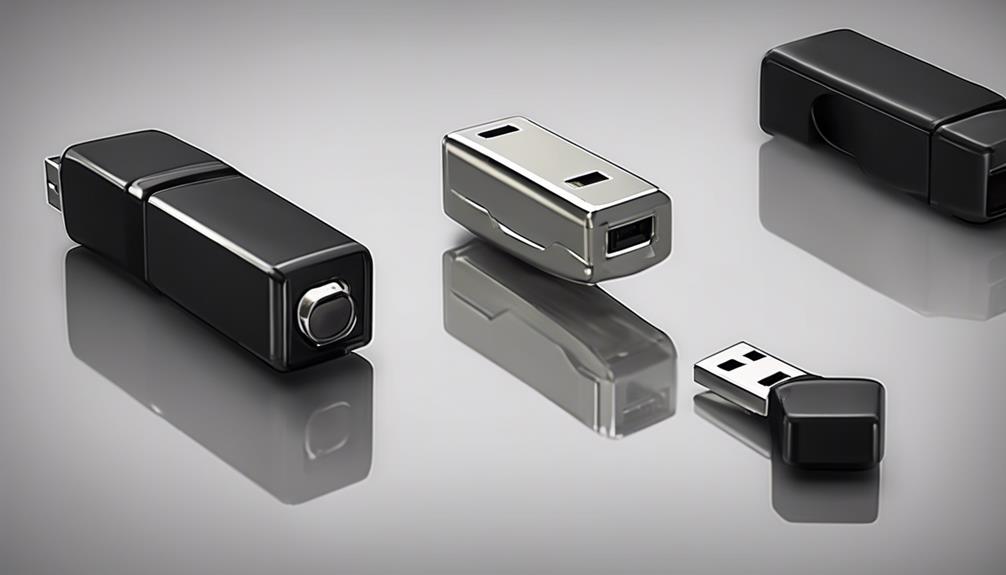

USB thumb drive cameras combine a familiar flash-drive form with a small video recorder. Their compact appearance can make them useful for lawful security, evidence collection, equipment monitoring, or documenting an area where a conventional camera would be impractical. However, discreet does not mean unrestricted: recording people, conversations, or private spaces may require consent under local law.
The best choice depends less on the label “spy camera” and more on the conditions in which the device will be used. Consider image quality, lighting, battery capacity, storage, motion detection, connectivity, and the camera’s physical durability before buying.
10 USB Thumb Drive Camera Types to Consider
1. Ultra-slim USB spy camera
An ultra-slim model is designed for minimal visibility and easy placement. Useful features may include motion detection, loop recording, and onboard storage. Encryption or password protection can also help reduce the risk of unauthorized access if recordings are stored on the device.
2. 4K-resolution covert camera
A 4K camera is intended for situations where fine image detail matters. Higher resolution can make recorded footage clearer and may provide more flexibility when reviewing or enlarging portions of a video. Keep in mind that image quality also depends on lighting, lens quality, storage capacity, and the way footage is compressed.
3. Motion-activated mini recorder
Motion activation starts recording when movement is detected instead of capturing continuously. This can conserve storage space and make long recordings easier to review. Check whether the model also records audio, how its motion sensitivity is adjusted, and whether it supports continuous recording when required.
4. Night-vision flash-drive camera
Night-vision models use infrared illumination or low-light technology to record when visible light is limited. They can be useful for monitoring dark rooms or nighttime areas, although footage quality may vary considerably in near-total darkness. Infrared illumination may also be visible on some devices, so review the manufacturer’s description carefully.
5. Wireless USB hidden camera
A wireless model may send a live feed to a phone or computer, allowing remote viewing instead of requiring the device to be retrieved. Connectivity depends on the surrounding network and the camera’s software. Before choosing one, review how it handles account security, passwords, stored footage, and interruptions when the connection is unavailable.
6. Portable HD thumb camera
A portable HD camera offers a balance between compact size, straightforward operation, and clear everyday footage. A user-friendly design can be valuable when the device needs to be started quickly. Also check the supported memory-card capacity and whether the camera can monitor a live feed or only record locally.
7. Micro USB surveillance device
Micro USB models emphasize small dimensions and simple connection to compatible equipment. Their plug-and-play design may make setup easier, but compatibility should not be assumed. Confirm the connector type, operating requirements, file format, and whether the device works with the computer or charger you plan to use.
8. Water-resistant or waterproof thumb camera
Weather-resistant construction can be useful for outdoor monitoring, but “waterproof” should not be treated as a universal guarantee. Look for a clearly stated protection rating and follow the manufacturer’s limits for rain, splashes, or submersion. A device suitable for damp conditions may not be designed for underwater use.
9. Long-battery-life recorder
A larger battery or more efficient power management can support longer recording sessions and reduce charging interruptions. Actual runtime will depend on resolution, motion detection, wireless streaming, night vision, and other active features. Compare claimed runtime under similar operating conditions rather than relying on battery capacity alone.
10. AI-powered USB covert camera
Some advanced cameras use artificial-intelligence features to identify movement, distinguish subjects, or track activity. These tools may reduce unnecessary recordings, but they also raise important privacy and security questions. Review what the system analyzes, where data is processed, how long it is retained, and whether tracking can be disabled.
What to Check Before Buying
- Recording quality: Compare resolution, frame rate, lens coverage, and low-light performance rather than focusing on resolution alone.
- Storage: Confirm whether footage is saved internally, to a removable card, or through a connected device. Loop recording may overwrite older files.
- Power: Check battery runtime, charging method, and whether recording is possible while connected to USB power.
- Detection features: Motion activation can save storage, but sensitivity and detection range affect how reliably it captures events.
- Connectivity: Wireless viewing is convenient, but local recording may be more dependable when networks are unavailable.
- Privacy and security: Use strong passwords, protect stored files, and avoid placing cameras where people reasonably expect privacy.
- Durability: For outdoor use, verify the stated protection level instead of assuming that a compact USB design is weatherproof.
Responsible Use Matters
Discreet cameras should be used only for legitimate purposes and in accordance with applicable recording, privacy, and workplace-monitoring rules. Audio recording can be subject to stricter requirements than video, and remote access introduces additional account and data-security risks. Clear signage, consent, or another lawful basis may be necessary depending on the setting.
USB thumb drive cameras vary widely in capability. A slim model may suit portability, while a motion-activated, night-vision, wireless, weather-resistant, or AI-enabled design may better match a specific monitoring need. Start with the environment and legal requirements, then choose the features that support that use without collecting more footage or personal data than necessary.