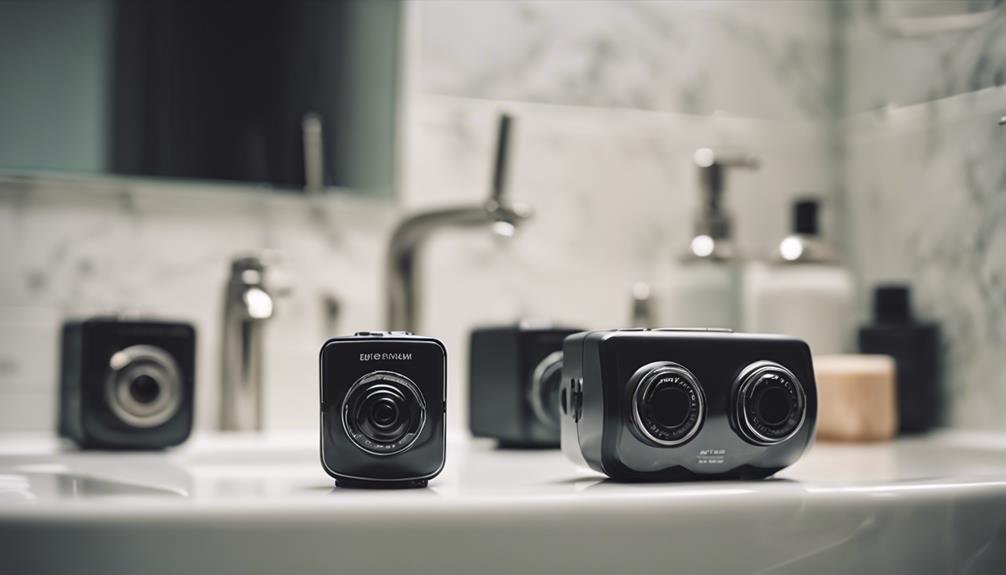

Bathrooms are among the most private areas in any home, workplace, rental property, or business. For that reason, hidden or “spy” cameras should not be used to record people in a bathroom. Covert recording in an intimate space can seriously violate privacy, damage trust, and may breach applicable surveillance or data-protection rules.
If your goal is to improve safety, prevent water damage, or monitor an entrance, there are more appropriate solutions. The right choice depends on what you are trying to protect and whether recording inside the bathroom is genuinely necessary.
Start with the security problem
Before buying any camera, identify the specific concern. A camera inside a bathroom is rarely the best answer, and many common problems can be addressed without recording private activity.
- Water leaks: Use a water-leak detector near sinks, toilets, washing machines, or plumbing connections.
- Unauthorised entry: Install a visible camera outside the bathroom, positioned to monitor the hallway or doorway rather than the interior.
- Care or safety checks: Consider an emergency call button, door sensor, or another openly agreed safety device.
- Property protection: Improve lighting, locks, ventilation, and access control before considering video surveillance.
When a waterproof camera may be suitable
A waterproof or water-resistant camera can be useful in damp areas when it is installed openly and used for a legitimate, clearly communicated purpose. Examples include monitoring an outdoor entrance near a washroom facility, checking a utility area, or observing plumbing equipment that is not a private space.
Do not assume that a product described as waterproof is suitable for direct exposure to water. Product specifications can differ, so check the manufacturer’s stated protection rating, installation limits, power requirements, and operating temperature before installation. A camera designed for outdoor use may still be inappropriate for a steamy indoor bathroom, particularly if it is placed near a shower or bath.
Features worth considering for lawful monitoring
Visible design and clear notice
A visible camera makes its purpose clear and supports informed consent. Place it where people can easily see it, and provide appropriate notice where required. Never conceal a camera in toiletries, decorations, motion sensors, vents, smoke alarms, or other everyday objects.
Motion detection
Motion detection can reduce unnecessary recordings and alerts when a camera is monitoring an entrance or utility area. Adjust sensitivity carefully so that normal movement does not create excessive notifications. This feature should not be used to make covert recording easier.
Image quality and low-light performance
For an approved monitoring location, resolution and low-light performance affect how useful recordings will be. Higher resolution may make details easier to review, while infrared night vision can help in dark areas. These capabilities should be matched to the purpose of the camera rather than treated as a reason to record in a private room.
Network and account security
Wi-Fi cameras can provide remote viewing and motion alerts, but they also require careful account and network protection. Use a strong, unique password, enable available security features, restrict access to authorised users, and keep the camera’s software updated according to the manufacturer’s instructions. Avoid sharing footage more widely than necessary.
Privacy and consent checklist
Before installing any surveillance device, confirm that everyone who could be recorded understands what is being captured, why it is being captured, who can access it, and how long recordings will be kept. Rules vary by location and situation, so obtain appropriate legal advice when the camera is used in a workplace, rental property, shared accommodation, or public-facing facility.
- Do not install hidden cameras in bathrooms, changing areas, bedrooms, or similar private spaces.
- Choose the narrowest camera view needed for the stated security purpose.
- Use visible signage or direct notice where appropriate.
- Limit access to recordings and delete them when they are no longer needed.
- Prefer non-recording sensors when video is not essential.
Bottom line
There is no responsible “top five” list of spy cameras for bathrooms. The safest approach is to avoid covert bathroom surveillance altogether. For leak prevention, use water sensors; for doorway or property security, use a visible camera outside the private area; and for personal safety, use an openly agreed alert or monitoring device. These alternatives address common security needs without turning a highly private room into a concealed recording zone.