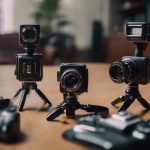

Not every surveillance camera needs an internet connection. A non-Wi‑Fi camera can record footage locally, operate in places without a network, and reduce the need to manage remote access. The right choice depends on where the camera will be used, how discreet it needs to be, and whether you need continuous or motion-triggered recording.
Before choosing any hidden or compact camera, use it responsibly. Recording people without their knowledge may be restricted by privacy and surveillance laws, particularly in private spaces. Check the rules that apply in your location and obtain consent where required.
What to look for in a non-Wi‑Fi camera
Although designs vary, the most useful features for offline surveillance usually include:
- Local recording: Footage is saved to internal memory or a removable memory card rather than uploaded over Wi‑Fi.
- Battery life: Longer operating time is important for cameras placed where frequent charging is inconvenient.
- Motion detection: Recording starts when movement is detected, helping reduce unnecessary footage and conserve power.
- Night vision: Infrared capability can help capture footage in dark or low-light conditions.
- Video quality: Higher-resolution recording can make details easier to review, but may use more storage.
- Viewing angle: A wider lens can cover more of a room or surrounding area, while a narrower view may be better for a specific subject.
- Durability: Outdoor use requires construction that can withstand the relevant weather and environmental conditions.
Types of spy cameras without Wi‑Fi
Mini spy cameras
Mini cameras are designed for compact, low-profile installation and are suitable when space is limited. Many models offer high-definition recording, motion detection, and night vision. For outdoor monitoring, look for a durable, weather-resistant design rather than assuming that every small camera is suitable for exterior use.
A wide viewing angle can be useful when the camera needs to cover a larger area. However, check how footage is stored and how easily the battery can be charged before choosing a particularly small model.
Motion-activated cameras
Motion-activated cameras are a practical option for monitoring a defined area without recording continuously. They begin capturing footage when movement enters the detection zone, which can reduce storage use and extend battery life.
Pay close attention to detection range, trigger response, standby time, and night vision performance. A camera with poor low-light recording may detect movement successfully but still produce footage that is difficult to use. Motion detection can also be affected by the camera’s position and activity in the surrounding area.
USB charger cameras
USB charger cameras are made to resemble ordinary charging accessories, allowing them to fit into some indoor environments with minimal visual disruption. Depending on the design, they may include local video storage, motion detection, night vision, and loop recording.
These cameras are generally most appropriate for stationary indoor monitoring. Confirm exactly how the device records and stores video, and avoid placing any camera where people would reasonably expect privacy.
Body-worn cameras
Body-worn cameras are portable and designed to record while being carried or attached to clothing or equipment. They can be useful when the camera needs to move with the user rather than remain fixed in one location.
Important considerations include video resolution, lens coverage, battery capacity, storage capacity, and ease of operation. Some designs also provide night vision for low-light recording. Because body-worn recording captures nearby people and conversations, privacy requirements should be considered before use.
Smoke detector-style cameras
Smoke detector-style cameras are intended to blend into an indoor ceiling installation. Their appearance can make them less visually obvious than a conventional camera, while the camera itself may provide high-definition recording and local storage.
Only use a camera housing that does not interfere with the operation of a genuine smoke alarm. A surveillance device should never replace a working safety detector. Check the installation position, viewing angle, power arrangement, and storage method before relying on this type of camera.
Pen cameras
Pen cameras combine a small recording device with a familiar everyday form. Their compact size makes them portable, and many provide high-definition video for short recordings or mobile use.
They are best suited to situations where portability matters more than extended battery life or a large viewing area. Before using one, check the recording controls, available storage, charging method, and whether the camera’s position provides a clear, unobstructed view.
Choosing the best option
For a fixed indoor location, a motion-activated, USB charger, or smoke detector-style camera may be suitable. A mini camera is more flexible when size and placement are priorities, while a body-worn or pen camera is better for portable recording. Compare battery life, storage, night vision, video quality, and installation requirements rather than choosing based on appearance alone.
The best non-Wi‑Fi spy camera is the one that matches the setting, records reliably without an internet connection, and can be used lawfully and respectfully.