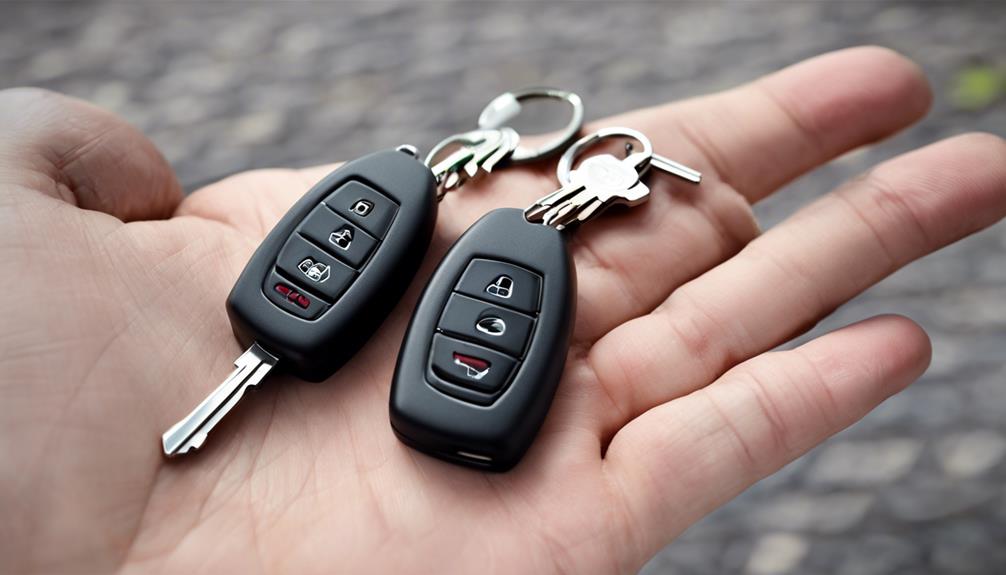

Car-key-style cameras are designed to blend into an everyday object, making them less noticeable than a conventional camera. Because models vary widely, the best choice depends on where the camera will be used, how long it must operate, and the level of detail required in the recordings.
Before purchasing or using one, check the laws that apply to audio and video recording in your location. Do not use a concealed camera to invade someone’s privacy, record private spaces without permission, or monitor people unlawfully. For legitimate security, documentation, or consent-based recording, the following three categories provide a useful way to compare available devices.
1. Compact Key-Fob Cameras for Maximum Discretion
The main advantage of a key-fob camera is its inconspicuous appearance. A compact design can be easier to carry and position than a larger camera, particularly when the device needs to remain unobtrusive in a permitted recording environment.
When comparing these models, examine the placement and appearance of the lens. A camera that looks noticeably different from an ordinary key fob may attract attention. Also consider the controls: large buttons, bright indicator lights, or audible startup sounds can make discreet operation more difficult.
- Small dimensions and a design that resembles a normal key fob
- A lens positioned to provide a clear, unobstructed view
- Simple controls that do not require repeated handling
- Status lights or sounds that can be managed where legally permitted
2. Long-Battery-Life Cameras for Extended Recording
If the camera must operate for a longer period, battery capacity becomes one of the most important specifications. A compact device has limited room for a battery, so recording time may be shorter than expected. Check the manufacturer’s stated runtime and remember that continuous recording, higher video quality, and low-light features can increase power use.
Charging arrangements also matter. A model that uses a common charging connection may be more convenient than one requiring a proprietary cable. Look for clear information about charging time, battery replacement, and whether the camera can record while connected to power. Avoid relying on a device for important documentation until its actual runtime has been tested in the intended setting.
Battery questions to ask
- How long does it record continuously on a full charge?
- Does motion activation extend operating time?
- How long does a full recharge take?
- Can recordings be saved safely if the battery runs out?
3. Higher-Quality Cameras for Clearer Evidence
Discreet size is not enough if the footage is blurred, poorly exposed, or too wide to show useful detail. For recordings where clarity matters, compare resolution, frame smoothness, lens angle, and performance in dim conditions.
Higher resolution can help preserve detail, but it may also create larger files and consume more battery. A wide-angle lens can capture more of the surrounding area, while a narrower view may provide greater detail on a specific subject. Neither approach is automatically better; the suitable choice depends on the camera’s lawful purpose and placement.
Low-light performance deserves particular attention. Some cameras advertise night vision or infrared recording, but the useful range and image quality can differ. If nighttime footage is important, review sample recordings when available rather than relying only on a feature label.
Storage, Operation, and Footage Management
Storage capacity determines how much video can be retained before older files are overwritten or recording stops. Check whether the camera includes internal storage, accepts a memory card, or requires footage to be transferred regularly. Confirm the maximum supported capacity and the recording format before buying additional storage.
Consider how files are accessed as well. A straightforward connection to a computer can be preferable to a complicated application, while timestamp settings and file organization can make later review easier. Protect recordings from unauthorized access and keep only footage that has a legitimate purpose.
Price and Practical Value
Lower-priced car-key cameras may provide basic video recording, but they can involve compromises in battery life, construction, storage, or image quality. More expensive models may add features such as motion activation, improved low-light performance, or easier file management, though those features are not useful for every situation.
Compare the complete package rather than the headline price. Include the cost of memory cards, charging accessories, replacement batteries, and any required software. User feedback can reveal recurring problems, but assess reviews carefully and give greater weight to specific comments about recording quality, reliability, and battery performance.
Choosing the Right Option
For maximum discretion, focus on size and lens placement. For longer sessions, prioritize verified battery performance and dependable storage. When the footage must show fine detail, choose the strongest combination of resolution, lighting performance, and stable recording.
A car-key camera should be used only for a clear, lawful purpose, with respect for consent and privacy. Comparing these three priorities—concealability, endurance, and image quality—can help narrow the choices without paying for features that are unnecessary for the intended use.