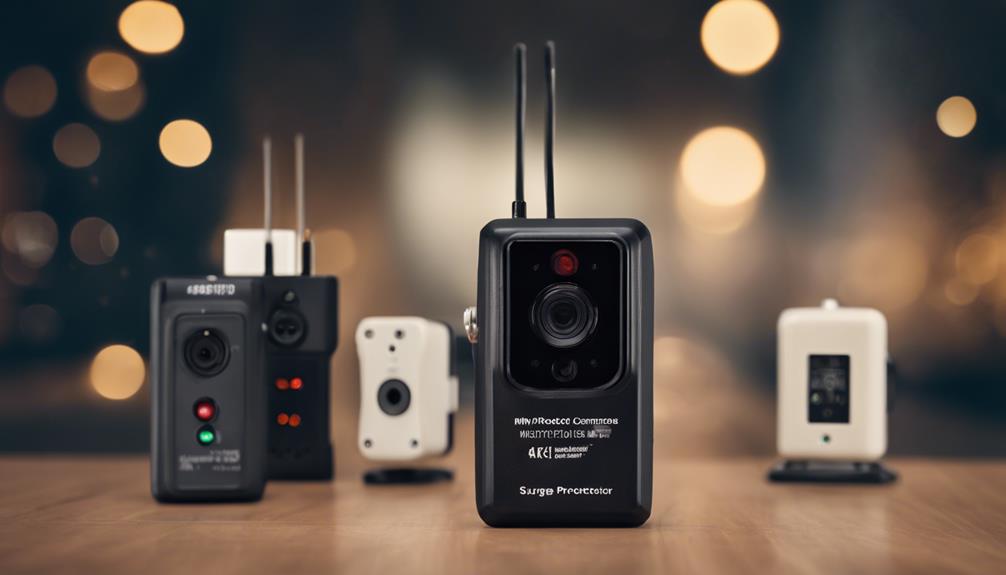

Home cameras without Wi-Fi can provide dependable monitoring without relying on a wireless router, cloud account, or continuous internet connection. They are useful for homes with unreliable broadband, detached buildings, temporary properties, and anyone who prefers to keep recordings under local control.
An offline camera system is not automatically private or legally unrestricted. Placement, audio recording, consent, and the handling of saved footage still matter. The best setup balances practical security needs with respect for the privacy of everyone who may be recorded.
Why choose a camera without Wi-Fi?
The main advantage is local operation. Depending on the design, footage may be saved to a microSD card, a digital video recorder (DVR), or a network video recorder (NVR) that remains inside the property. This avoids dependence on cloud storage and can reduce recurring subscription costs.
- Less reliance on internet service: The camera can continue recording during an internet outage.
- Local control: Recordings remain on a memory card or recorder rather than being routinely uploaded to an online service.
- Simpler installation: There is no need to configure a home Wi-Fi network, cloud account, or remote-access settings for basic recording.
- Useful in disconnected locations: Detached garages, workshops, rural properties, and temporary units may not have convenient broadband.
Offline operation does not mean that every camera is completely inaccessible to outsiders. Any device with a removable card, service port, or local login should still be protected and handled carefully.
Types of home cameras that work without Wi-Fi
Standalone microSD cameras
These compact cameras record directly to a microSD card. Many support motion-triggered recording, night vision, and automatic overwriting when the card is full. They are suitable for monitoring a single room, entry area, storage space, or small outbuilding.
Check whether the camera can record without completing an app setup or connecting to the internet. Also confirm the supported card capacity and whether the recording mode meets your needs.
Wired DVR and NVR systems
A wired system connects one or more cameras to a recorder with local storage. DVR systems are commonly paired with analog cameras, while NVR systems are designed for compatible digital cameras. These setups are a practical choice when continuous recording, multiple viewpoints, and centralized playback are more important than portability.
Place the recorder somewhere secure and make sure the cables cannot be easily disconnected. A local monitor can be used for viewing and configuration without requiring remote access.
Battery-powered and trail cameras
Battery-powered outdoor cameras and trail cameras are designed for locations where running cables is difficult. They generally conserve power by remaining in standby mode and recording when movement is detected. Battery life depends on activity, settings, weather, and the device itself, so regular checks are essential.
Cellular cameras
Some cameras use a cellular connection rather than home Wi-Fi. This can allow remote viewing from a property without fixed broadband, but it is different from a fully offline camera and normally involves mobile coverage and data costs. Consider this option only when off-site access is important.
Choosing the right offline camera
Start with the location and the type of evidence you need. A visible, weather-resistant camera is usually appropriate for driveways, entrances, and other outdoor areas. For a detached building, battery life, weather protection, and local storage may matter more than advanced app features.
Important specifications and practical considerations include:
- Storage method: Determine whether recordings use a microSD card, removable media, or a recorder with an internal drive.
- Recording mode: Motion-triggered recording saves storage, while continuous recording provides a more complete timeline.
- Night performance: Check the camera’s low-light and infrared capabilities for the environment where it will be installed.
- Power: Compare mains power, rechargeable batteries, replaceable batteries, and optional solar charging.
- Weather resistance: Outdoor equipment needs suitable protection from rain, dust, and temperature changes.
- Viewing and export: Confirm how footage is played back and copied when there is no internet connection.
Higher resolution can make faces, labels, or other details easier to see, but it also uses more storage. A camera with reliable placement and adequate lighting can be more useful than a higher-resolution model installed in the wrong position.
Installation and maintenance
Position the camera to cover the intended area without unnecessarily recording neighbors, public spaces, or private rooms. Test the view during both daytime and nighttime conditions. Adjust motion sensitivity so that the system captures useful activity without filling the storage with irrelevant triggers.
Use a strong local password where the device supports one, restrict physical access to memory cards and recorders, and keep important footage in a secure location. Check battery levels, storage capacity, time settings, cables, and night vision regularly. If a recorder is used for continuous recording, monitor its storage health and replace failing media promptly.
Privacy and legal responsibilities
Using a camera without Wi-Fi does not remove surveillance or consent obligations. Rules vary by location, but bedrooms, bathrooms, and other spaces where people reasonably expect privacy should not be monitored. Audio may be subject to stricter consent requirements than video, so disable sound recording when it is unnecessary.
For shared homes, care settings, rentals, or workplaces, provide notice or obtain consent where required. Keep recordings only as long as necessary, limit access, and avoid sharing footage except for a legitimate safety, insurance, or legal purpose.
With suitable placement, secure storage, and regular testing, a Wi-Fi-free camera system can offer reliable local surveillance while reducing dependence on cloud services and home internet.