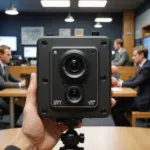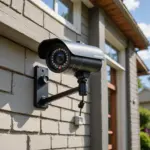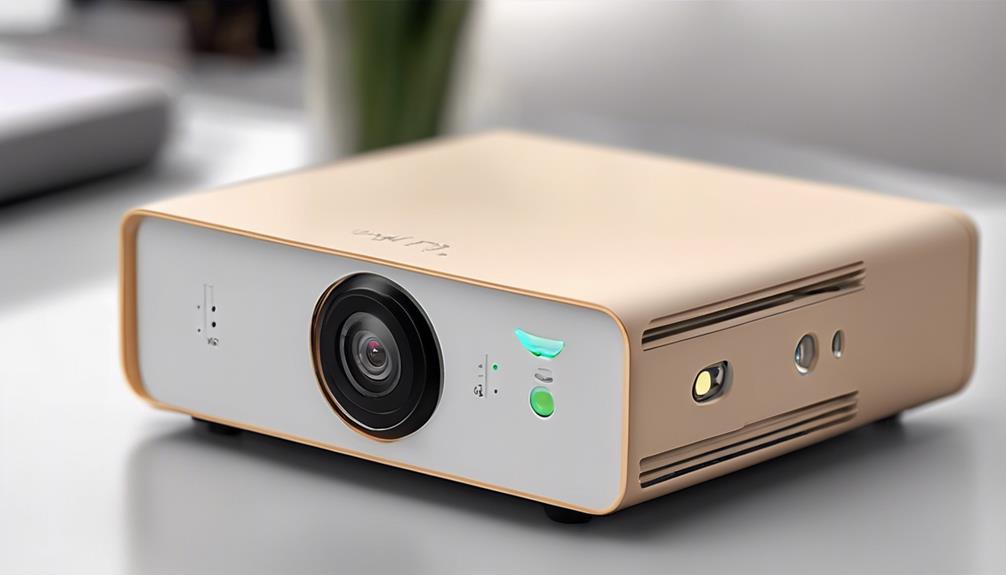

A micro SD spy camera is a compact video-recording device that saves footage to a removable microSD card rather than depending entirely on cloud storage. This makes it useful for situations where an internet connection is unavailable, live streaming is unnecessary, or recorded files need to be reviewed later on a computer.
These cameras are often chosen for their small size and flexible placement. However, the best model is not necessarily the smallest one. Storage capacity, power arrangements, recording controls, image quality, and lawful use all matter when choosing a camera for home monitoring, property security, or documentation.
How a micro SD spy camera works
Most models contain a small camera lens, a digital video recorder, a battery or power input, and a slot for a microSD card. After a compatible card is inserted, the camera records video to local storage. Files can usually be transferred by removing the card or connecting the camera to a computer, depending on the design.
Common recording functions include:
- Continuous recording: Captures video for as long as power and storage are available.
- Motion detection: Starts recording when movement is detected, which can reduce unnecessary footage.
- Loop recording: Automatically replaces older files when the card becomes full.
- Scheduled recording: Allows recording during selected periods on models that support time settings.
- Low-light or infrared recording: Helps the camera capture activity in dim conditions, although image quality varies.
Common designs and configurations
Micro SD cameras are available in several forms. Some are ordinary-looking devices intended to blend into their surroundings, while others are simply small standalone cameras that can be positioned on a shelf, desk, vehicle, or other suitable surface. A compact design may be useful where space is limited, but extremely small cameras can involve compromises in battery capacity, lens quality, or ease of adjustment.
Some models operate entirely offline and record only to the card. Others add Wi-Fi for remote viewing or configuration while continuing to support local recording. A Wi-Fi connection can be convenient, but it also introduces additional setup, network, and security considerations. If remote access is not required, an offline model may provide a simpler arrangement.
Features worth comparing
Video quality and viewing angle
Resolution affects how clearly recorded details appear, but it is not the only factor. Lens quality, lighting, camera placement, frame rate, and field of view also influence the result. A wide-angle lens can cover more of a room, while a narrower view may provide more useful detail in a specific area.
Power and operating time
Battery-powered cameras are convenient for temporary or portable use, but their operating time depends on battery capacity, recording mode, motion activity, and whether night recording is enabled. For extended monitoring, consider a model that can remain connected to a suitable power source. Confirm how the camera behaves while charging if uninterrupted recording is important.
Storage and file management
Check the manufacturer’s stated card compatibility before buying. Video consumes storage quickly, especially when recording continuously at higher quality. Motion recording and loop recording can help manage space, but important files should be copied to another device before the card is reused or overwritten.
Controls and reliability
Useful controls may include adjustable motion sensitivity, date and time settings, status indicators, and easy file transfer. Build quality also matters. A camera that is difficult to position, frequently stops recording, or produces unreliable files may be less useful than a slightly larger model from a dependable manufacturer.
Practical and lawful uses
When used responsibly, a micro SD spy camera can support home security, monitoring of an entrance or garage, documentation of property conditions, or short-term observation where a larger camera would be impractical. Some people also use compact cameras for personal documentation or field recording when carrying conventional equipment is inconvenient.
Use should remain within applicable privacy and recording laws. Do not place a camera in areas where people reasonably expect complete privacy, such as bathrooms or changing areas. Audio recording can be regulated separately from video and may require consent. Rules can also differ for homes, workplaces, rental properties, and shared spaces, so check local requirements before recording anyone.
Basic setup checklist
- Use a compatible microSD card and format it according to the camera’s instructions.
- Set the date, time, recording mode, and motion sensitivity.
- Position the camera so that it captures the intended area without recording private spaces unnecessarily.
- Test daytime and low-light footage before relying on the device.
- Confirm that files can be opened and transferred successfully.
- Secure important recordings in a separate location and handle them carefully if they may be used as evidence.
Making the right choice
The right micro SD spy camera depends on the task rather than on size alone. Choose a compact battery model for temporary placement, a continuously powered camera for longer monitoring, or a Wi-Fi-enabled version when remote access is genuinely needed. Prioritize dependable recording, suitable storage, adequate lighting performance, and straightforward file access. Most importantly, use the device transparently and lawfully wherever privacy or consent may be involved.