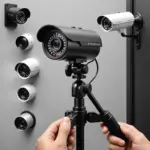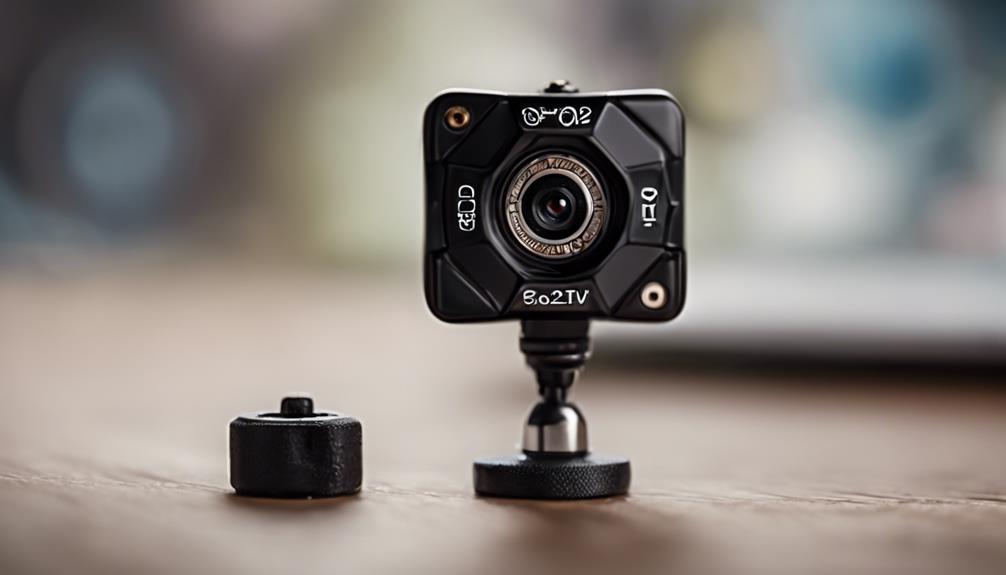

An apartment camera can help you monitor an entryway, check on packages, keep an eye on a pet, or document activity around your home. The best setup depends on your building’s rules, the layout of your apartment, your internet connection, and the level of coverage you actually need. Apartment setups illustrate practical residential surveillance applications that balance tenant safety, privacy, and legal considerations.
Renters also face limits that homeowners may not: drilling may be prohibited, hallways and shared entrances may be managed by the landlord, and a camera pointed in the wrong direction can capture neighbors or visitors unnecessarily. A good apartment security setup therefore combines practical coverage with careful placement and secure operation.
Start with the area you need to monitor
Before comparing cameras, identify the specific problem you want to solve. A camera aimed at your apartment door has different requirements from one used inside the living room to check on a pet.
- Front-door monitoring: Look for clear facial detail, motion alerts, night vision, and a field of view wide enough to show the area immediately outside your door.
- Package awareness: Motion detection and app notifications can help you check whether a delivery has arrived, although a camera may not prevent theft by itself.
- Indoor checks: A compact indoor camera can be useful for checking pets or confirming that a child or caregiver is present when appropriate consent and local requirements have been addressed.
- Window or balcony coverage: Placement should not obstruct emergency exits or unnecessarily record neighboring units, shared spaces, or public areas.
Types of cameras for apartments
Doorbell and entryway cameras
A doorbell-style camera is often a practical choice for apartment door monitoring. Depending on the building and lease, it may offer video, motion detection, two-way audio, and visitor notifications. Some apartments do not have a suitable doorbell or do not permit replacing existing hardware, so confirm the installation requirements before buying.
Wireless indoor cameras
Wireless cameras are popular with renters because they usually require little or no permanent alteration to the property. Many use a power cable, while battery-powered models can be positioned more flexibly. Wireless does not mean maintenance-free: the camera needs a dependable Wi-Fi signal, regular charging when applicable, and a secure account.
Wired camera systems
Wired cameras can provide continuous power and may support local recording, but installation is less convenient in a rental. Running cables through walls, ceilings, or shared areas may violate building rules or create safety concerns. They are generally more suitable when the property owner approves the installation.
Features worth comparing
Focus on features that match your intended location rather than choosing the longest specification list. For an apartment door camera, useful considerations include: For apartment monitoring, explore wireless home monitoring options that balance easy installation, coverage, and dependable alerts.
- Resolution and low-light performance sufficient to identify activity near the entrance.
- Motion zones and adjustable sensitivity to reduce alerts caused by hallway traffic.
- Two-way audio for communicating with a visitor or delivery person.
- Local storage, cloud storage, or both, with clear information about access and retention.
- Battery life and charging arrangements for models that are not continuously powered.
- A mounting method that does not damage doors, walls, windows, or building fixtures.
- Strong account security, including a unique password and available multifactor authentication.
A wide viewing angle is not always better. Excessive coverage can record more of a shared hallway or another person’s property than necessary. Aim the camera so it protects your entrance while limiting incidental footage.
Installation and everyday security
Check your lease and ask building management about rules for door-mounted devices, window mounts, exterior fixtures, adhesives, and recording in common areas. Do not block an emergency exit, interfere with a door closer, or attach equipment to property you are not authorized to modify.
Once installed, change the camera’s default login details and use a strong, unique password. Keep the camera’s software and companion app updated when updates are available. Review who can access the account, avoid sharing recordings casually, and choose storage settings that retain footage only as long as you need it. If the camera supports remote access, secure the associated email account as well.
Privacy and hidden-camera concerns
Camera use inside an apartment still affects other people. Visitors, roommates, caregivers, maintenance workers, and neighbors may have privacy rights that vary by location. Recording audio can be subject to separate rules from recording video, so do not assume that a camera permitted in one situation can legally record conversations.
Do not place cameras in bathrooms, bedrooms used by other people, or other areas where someone would reasonably expect privacy. Discreet monitoring should not be used to secretly observe guests, tenants, caregivers, or workers. If monitoring another person is necessary for a legitimate purpose, consider disclosure and consent where required, and obtain legal or tenant-support advice before recording.
Choose the simplest setup that meets the need
For many renters, one carefully positioned entryway camera and, if needed, one indoor camera provide more useful coverage than a complex system aimed everywhere. Compare the installation limits, power requirements, storage practices, alert controls, and privacy implications before purchasing. A well-configured apartment camera can support safety and documentation while respecting the people who share the building and the home.