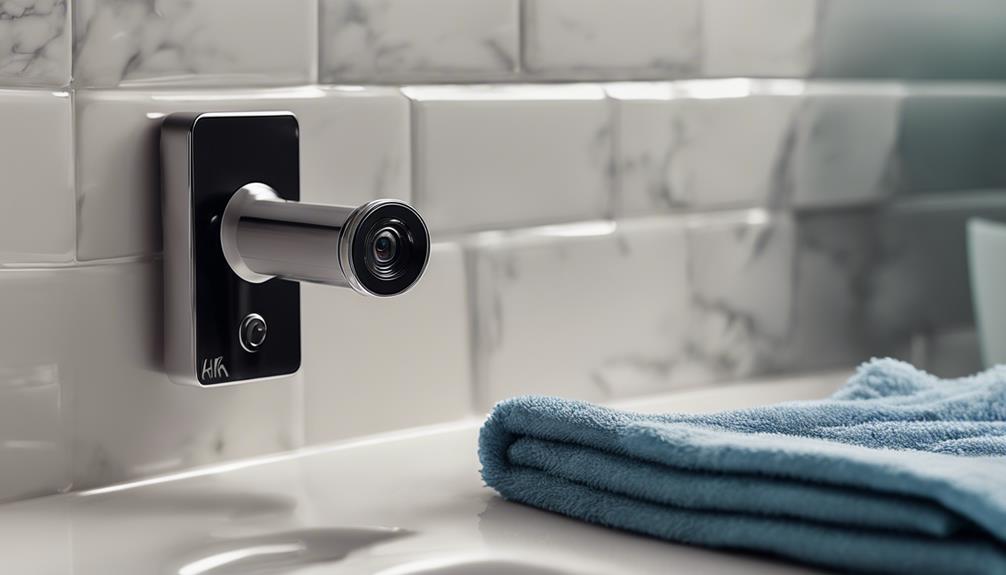

Bathrooms are private spaces, so security measures must protect people without recording them in vulnerable situations. Hidden or “spy” cameras should not be installed in a bathroom, changing area, or any other place where people reasonably expect privacy. In many locations, recording someone without their knowledge or consent may also violate privacy or surveillance laws.
If your goal is to protect your home, prevent unauthorized access, or detect leaks and emergencies, there are safer alternatives that do not involve covert video recording.
Use visible cameras outside the bathroom
A visible security camera can monitor an entrance, hallway, or other shared area without filming inside the bathroom. Position it so the lens cannot capture the interior through an open door. A camera outside the room may help document unauthorized entry while respecting the privacy of anyone using the bathroom.
When choosing an exterior camera, consider:
- A clearly visible design and an indicator or notice informing people that recording may occur
- Motion alerts that focus on the hallway or doorway rather than the bathroom interior
- Password protection and secure access to recorded footage
- Adjustable privacy masking or a physical shutter, if available
- Local storage or a storage policy that limits how long footage is retained
Choose entry and access sensors
If the concern is unauthorized entry, a contact sensor on the bathroom door can provide an alert when it opens or closes without recording anyone. These sensors are less intrusive than cameras and can be useful when monitoring a vacant home, a restricted area, or an entrance used by children and pets.
A smart lock or privacy lock can offer another layer of control. Make sure household members understand how it works and that an emergency override is available where appropriate. Avoid creating a system that could prevent someone from leaving safely.
Add motion-activated lighting
Motion-activated lights in the hallway or near an exterior entrance can discourage unwanted activity and improve safety at night. Aim the lighting at the approach to the bathroom rather than into the room. This provides visibility without creating a recording of private activity.
Monitor water leaks and other hazards
For many homeowners, the main bathroom-related risk is a leak rather than a security incident. A water-leak sensor placed near a toilet, sink, water heater, or washing-machine connection can send an alert when moisture is detected. Temperature and humidity sensors may also help identify conditions that could lead to damage, although they should be used as supplemental warnings rather than a replacement for regular maintenance.
Other practical safety measures include:
- Checking supply lines, seals, and caulking for signs of wear
- Keeping electrical devices away from sinks, tubs, and wet surfaces
- Using nonslip mats and adequate lighting
- Installing a working smoke or emergency alarm where suitable for the home’s layout
- Keeping an accessible way to call for help during an emergency
Protect privacy when using home security devices
Before installing any monitoring equipment, define exactly what area needs protection and whether video is necessary at all. Do not conceal cameras in fixtures, mirrors, vents, chargers, clocks, or other bathroom objects. Do not use night vision, audio recording, or remote viewing to monitor a bathroom.
Tell household members, guests, cleaners, contractors, and other visitors about visible cameras in nearby shared areas. Disable audio if it is not needed, restrict account access, use strong unique passwords, and review stored footage regularly. If a camera accidentally captures a private area, reposition it or enable a privacy mask before using it again.
A better approach to bathroom security
The most responsible bathroom security setup combines visible monitoring outside the room with non-camera tools inside it. Door sensors, privacy locks, motion lighting, and leak detectors can address common safety and security concerns without compromising personal privacy. When video is necessary, keep it limited to appropriate shared spaces, make its presence clear, and use the least intrusive setup that meets the actual need.