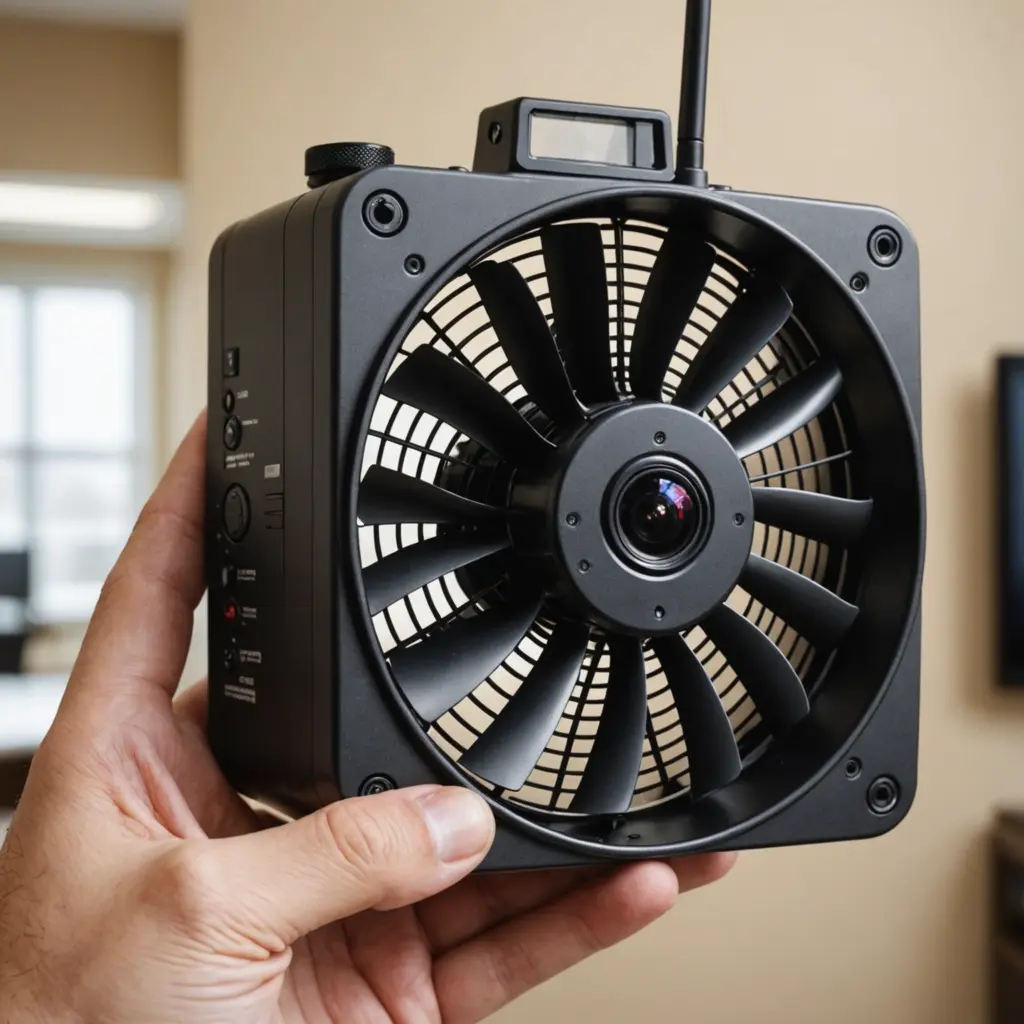

A spy camera built into a fan is designed to combine an everyday household object with video-monitoring hardware. Because a fan can blend into a room more easily than a conventional security camera, this type of device may be considered for discreet monitoring in homes, offices, or other locations where visible equipment is undesirable.
However, discreet placement does not remove the need for responsible use. Recording people without their knowledge or permission may violate privacy and surveillance laws, particularly in bedrooms, bathrooms, workplaces, or other areas where people reasonably expect privacy. Before installing or operating a hidden camera, confirm that its use is lawful and appropriate in your location. Audio recording can be subject to additional restrictions.
How a Camera-Equipped Fan Works
The camera is housed within the fan, allowing the device to perform its ordinary function while recording video from a fixed position. Depending on the model, footage may be captured continuously or only when movement is detected. The fan’s familiar appearance can make it less visually prominent than a standalone camera, but its position still determines how much of a room is visible.
Placement should be selected for a legitimate security purpose rather than to conceal recording from people. A clear view of the intended area, adequate lighting, and a stable mounting position can all affect the usefulness of the recorded footage.
Common Monitoring Features
Motion-triggered recording
Motion detection allows the camera to remain on standby until movement is identified within its detection range. It can then begin recording an event automatically. This approach may reduce unnecessary footage and make it easier to review activity, although performance can vary with lighting, distance, and movement across the camera’s field of view.
Motion alerts can also provide timely notification when activity occurs. They should be treated as a monitoring aid rather than a guarantee that every event will be detected.
Remote viewing
Wireless models may support live viewing and access to recorded footage through a connected smartphone, tablet, or other device. Remote access can be useful when checking a property from another location, provided the camera has a dependable network connection and the associated account is properly secured.
Some devices support both 2.4 GHz and 5 GHz Wi-Fi networks. Network compatibility and streaming performance depend on the specific product, the strength of the wireless signal, and the quality of the internet connection.
Video and audio recording
The camera may record video intended to show events in greater detail than a brief alert. Image quality depends on the device, available light, lens position, and storage settings. If the model includes a microphone, audio may add context, but it also creates extra legal and ethical concerns. Disable audio when it is not necessary and verify the rules that apply before recording conversations.
Installation and Security Checklist
Although wireless camera fans are often promoted as simple to set up, installation should include more than connecting the device to an app. A responsible setup includes:
- Choose a location where recording is lawful and clearly connected to a legitimate security need.
- Keep the camera away from spaces where occupants or visitors expect strong privacy.
- Use a strong, unique password for the camera account and enable available security protections.
- Install firmware or app updates supplied for the device when appropriate.
- Secure the Wi-Fi network and avoid sharing camera credentials unnecessarily.
- Set a defined retention period so recordings are not kept indefinitely.
- Inform people who may be recorded when notice or consent is required.
Advantages and Limitations
The main advantage of a camera integrated into a fan is its unobtrusive form. It may provide a stable viewing position, motion-based recording, and remote access without the appearance of a conventional security camera. These features can support monitoring of an entryway, shared workspace, or other authorized area.
There are also practical limitations. A fan’s position may restrict the viewing angle, moving blades or changing light can affect image clarity, and wireless streaming depends on network reliability. Motion detection may produce missed events or unnecessary alerts. The device should therefore complement, not replace, broader security measures and clear operating procedures.
Use It Responsibly
A spy camera in a fan should be treated as a security device—not as a way to secretly observe people in private situations. Define what needs to be monitored, limit the camera’s field of view, protect stored footage, and follow applicable privacy and recording laws. Used with consent and appropriate safeguards, a camera-equipped fan can offer convenient video monitoring while reducing the visual impact of security equipment.