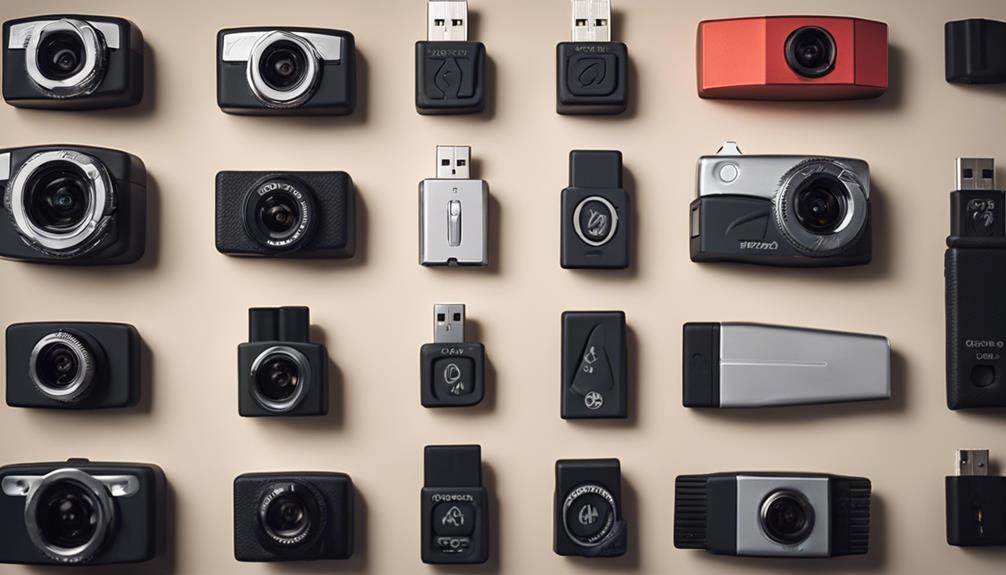

Flash drive spy cameras combine the familiar appearance of a USB storage device with a small camera and, in some models, an internal microphone. Their compact size makes them easy to carry, while their ordinary-looking design can help them fit into environments where a conventional camera would be distracting.
Although these devices are often marketed for discreet recording, they should only be used where recording is lawful and appropriate. Privacy and audio-recording rules vary by location, and recording people without proper permission may be illegal. For legitimate security, documentation, or personal-recording needs, understanding the available features can help you choose a practical device.
What Is a Flash Drive Spy Camera?
A flash drive-style camera is a compact recording device designed to resemble a standard USB thumb drive. Depending on the model, it may record video, still images, audio, or a combination of all three. Some devices save footage to internal storage or a removable memory card, while others use the USB connection to transfer files to a computer.
The main appeal is portability. A small device can be carried in a bag or pocket and used without the bulk of a traditional camera. However, the small form factor usually means compromises in battery capacity, storage, controls, and lens quality.
Features to Compare
Video resolution and image quality
Resolution is one of the first specifications to review. Some models advertise Full HD recording, while others list higher resolutions. A larger resolution number does not automatically guarantee better footage, particularly in poor lighting. Look for sample footage when available, and consider whether the camera produces clear images, natural movement, and readable details at the distance you need.
Motion activation
Motion-activated recording allows the camera to begin capturing when movement is detected. This can reduce unnecessary footage and help conserve battery power and storage space. Motion sensors can vary in sensitivity, however, so a device may record too frequently in a busy area or fail to activate when movement is slight.
Battery life and recording time
Small cameras have limited room for a battery. Check the stated recording time and remember that actual performance can change with resolution, lighting, motion detection, and audio use. A camera that records continuously may run for less time than one used intermittently through motion activation.
Storage and file transfer
Storage capacity determines how much footage the device can hold before files must be moved or deleted. Loop recording, where older files are overwritten, may be useful for temporary monitoring but can also remove footage you intended to keep. Confirm how files are transferred and whether the device works with your computer and operating system.
Low-light performance
Some flash drive cameras include infrared or night-vision features for dim environments. These can improve visibility in low light, but performance varies considerably. Check whether night vision produces monochrome footage, how far the infrared illumination reaches, and whether the camera creates visible indicators during operation.
Common Flash Drive Camera Formats
- Standard USB-style cameras: Designed to resemble ordinary thumb drives and suited to users who want a compact, portable recorder.
- Motion-activated models: Intended to capture activity only when movement is detected, reducing idle recording.
- Audio-and-video recorders: Include a microphone as well as a camera, so local audio laws are especially important.
- Low-light models: Use infrared or other low-light features for darker settings.
- Wearable alternatives: Pen, badge, glasses, watch, and clothing-style devices offer hands-free recording but may raise greater privacy concerns because they are designed to be worn around other people.
Limitations to Keep in Mind
A discreet appearance does not make a camera invisible or suitable for every situation. Indicator lights, lens placement, battery limits, and recording angles can affect usability. Audio may be muffled, and a wide-angle lens can produce distortion near the edges of the frame. Many compact devices also lack the dependable remote access, weather protection, or long-term power options found on purpose-built security cameras.
Wireless functions, when included, may provide remote viewing or live streaming, but they also require careful attention to passwords, device security, and network privacy. Avoid connecting unfamiliar hardware to sensitive computers until its software and storage behavior are understood.
Responsible Use and Final Checklist
Before using any flash drive-style camera, obtain consent where required and avoid private spaces such as bathrooms, changing areas, and bedrooms. Do not use covert recording to harass, intimidate, exploit, or secretly monitor another person. Store recordings securely, limit access, and delete footage that is no longer needed.
- Confirm local rules for video and audio recording.
- Choose the resolution, storage, and battery capacity that match the intended lawful use.
- Test motion detection and low-light performance before relying on the device.
- Check how recordings are transferred, protected, and deleted.
- Prefer visible, consent-based security equipment when transparency is practical.
Flash drive spy cameras can be convenient for compact, portable recording, but their usefulness depends on more than appearance. Image quality, battery life, storage, lighting performance, and responsible handling all matter. A careful feature comparison—and respect for privacy—will lead to a safer and more suitable choice.