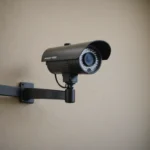

Moving CCTV cameras extend the view of a conventional fixed camera by allowing the lens to change direction. Depending on the model, the camera may pan from side to side, tilt up and down, zoom in on a subject, or automatically follow movement. This makes moving cameras useful for locations that need wider coverage or the ability to examine an event in greater detail.
However, a moving camera is not automatically the right choice for every site. Its performance depends on the camera’s mechanics, network connection, lighting, mounting position, and tracking settings. Understanding these factors will help you choose and configure a system that provides useful coverage without creating unnecessary privacy risks.
How moving CCTV cameras work
Most moving CCTV cameras use motorised components to control their direction. Pan moves the camera horizontally, while tilt changes its vertical angle. PTZ cameras add zoom, allowing an operator or automated system to inspect a distant subject more closely.
Some systems are controlled manually through a monitoring application or recorder. Others use motion detection and tracking software to identify movement and adjust the camera’s position. A tracking camera may be able to keep a person or vehicle near the centre of the image, although its success depends on factors such as lighting, obstructions, subject speed, and the accuracy of the camera’s detection settings.
Types of moving and tracking cameras
PTZ cameras
PTZ cameras are the most flexible option when an operator needs to scan an area and zoom in on points of interest. They can be programmed with preset positions, allowing the camera to return quickly to entrances, corridors, gates, or other important views.
Wired and wireless network models
A wired PTZ WiFi camera may use a fixed connection for power and video while still allowing wireless control or network access, depending on its design. Wired connections are generally easier to plan for when a site requires consistent bandwidth and dependable control.
A wireless PTZ network camera can be easier to install where running network cable is difficult. It still needs a reliable power source, and its wireless performance depends on signal strength, interference, network capacity, and the distance between the camera and the access point. A weak or unstable connection can make live viewing and automated tracking less responsive.
Rotating and auto-tracking cameras
Rotating security cameras are often used to survey broad areas. Some follow a programmed patrol route, while others react to detected movement. The most useful systems combine suitable image resolution, responsive motors, effective zoom, and tracking controls that can be adjusted to the environment.
Where moving cameras can be useful
Moving CCTV systems are well suited to spaces where a fixed camera would leave important areas outside its field of view. Possible applications include:
- Monitoring large retail floors, loading areas, or building entrances.
- Observing outdoor boundaries, yards, and access roads.
- Checking multiple points in a commercial or industrial property.
- Allowing security staff to inspect an alarm or incident remotely.
- Providing discreet monitoring where a compact camera must blend with its surroundings, subject to applicable rules and consent requirements.
A single rotating camera can cover several directions, but it cannot view every direction at the same time. For this reason, moving cameras are often most effective when combined with fixed cameras that provide continuous coverage of critical areas.
Installation and configuration advice
Begin by identifying the views that matter most and checking whether the proposed mounting position provides a clear line of sight. Walls, signs, foliage, glare, and other obstructions can interfere with both image quality and tracking.
Configure preset positions for important locations and decide how the camera should behave after it follows movement. It may need to return to a primary view, resume a patrol route, or remain at the last tracked position.
Motion settings should also be tested rather than left at unsuitable defaults. Adjust sensitivity and object-size thresholds to reduce unwanted responses caused by small animals, moving branches, shadows, or other environmental changes. Test the camera during daytime and nighttime conditions, because contrast and illumination can affect detection, focus, and tracking.
For network-connected systems, assess bandwidth and latency before installation. Automated tracking depends on a steady video stream and responsive control. Secure administrator accounts, use strong passwords, and keep access limited to people who need it.
Choosing the right moving CCTV camera
Compare cameras according to the requirements of the site rather than relying on the label “smart” or “tracking.” Important questions include:
- How wide an area must the camera cover?
- Is optical zoom needed for identifying activity at a distance?
- Will wired connectivity provide a more dependable installation?
- Can the camera operate effectively in the available lighting?
- Are preset positions, patrols, or automatic tracking required?
- Will the camera’s movement leave important areas temporarily unobserved?
A smooth pan-and-tilt mechanism, clear imaging, suitable mounting, and well-configured detection can matter more than having the largest feature list. Choose a system that fits the site’s power, network, maintenance, and monitoring arrangements.
Privacy and legal responsibilities
Moving or concealed cameras can create greater privacy concerns because they may follow people and reveal areas that a fixed camera would not capture. Rules vary by location, so check the requirements that apply before recording people or using surveillance in workplaces, shared buildings, care settings, or residential environments.
Avoid areas where people reasonably expect privacy, such as bathrooms and private living spaces. Where appropriate, provide clear notices, explain the purpose of monitoring, restrict access to recordings, and establish a retention policy. Use the narrowest field of view and the least intrusive settings that still meet the legitimate security objective.
With careful planning, a moving CCTV camera can expand coverage, support closer inspection of incidents, and reduce the need for multiple motorised units. Its value depends on sensible placement, reliable connectivity, realistic tracking expectations, and responsible use.