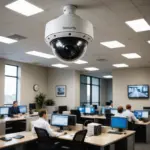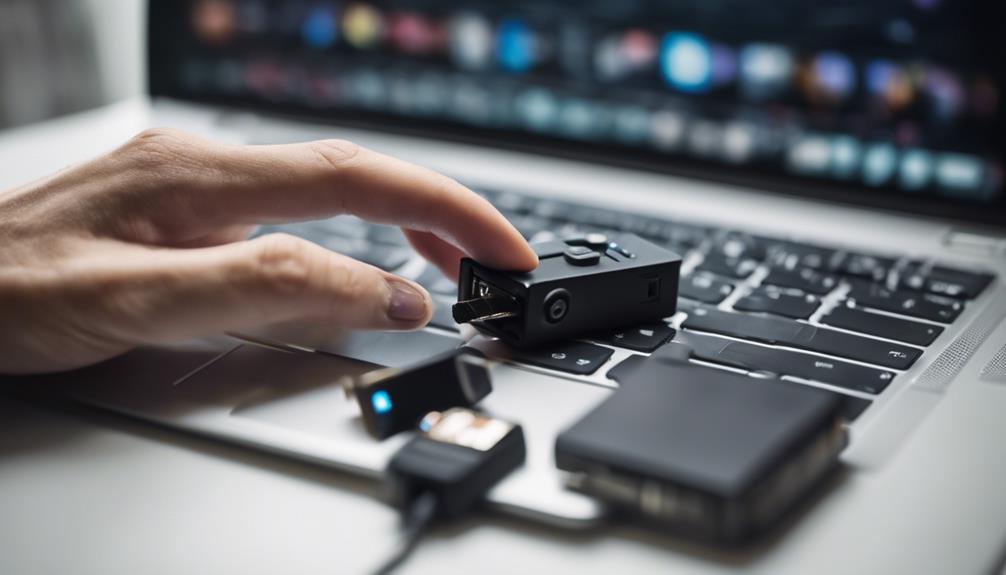

A DIY security camera system can help you monitor a home, small business, garage, workshop, or temporary site without committing to a one-size-fits-all installation. By choosing the cameras, recording method, network equipment, and storage that suit your property, you can create a system that fits both your priorities and your budget. For more discreet setups, explore covert DIY builds that integrate tiny modules into existing home security systems.
The best results come from planning coverage before purchasing equipment. A basic wireless kit may be enough for a front door or driveway, while a larger property may benefit from wired cameras, a network video recorder, and additional storage.
Why choose a DIY security camera system?
Building your own system gives you more control over installation, features, upgrades, and ongoing costs. You can focus spending on the areas that matter most, such as image quality, night vision, weather resistance, or longer video retention.
A DIY setup can also grow over time. You might begin with cameras covering entrances and add units later for a garage, side passage, garden, or business area. Replacing individual components is often more practical than replacing an entire system when your needs change.
Plan the coverage before buying equipment
Walk around the property during both daylight and darkness. Identify doors, gates, driveways, storage areas, and other locations where activity needs to be observed. Note possible obstructions such as walls, trees, roof overhangs, glare, and low lighting.
For each location, consider:
- The viewing angle and distance to the area of interest
- Whether the camera will be installed indoors or outdoors
- Available power and the practical route for cables
- Wi-Fi strength if you are considering a wireless camera
- Whether you need clear night images, a wide view, or motion alerts
- How long recordings should be retained
Avoid pointing cameras unnecessarily toward neighboring homes or private areas. Good placement protects your property while reducing privacy concerns.
Choose wired or wireless cameras
Wired systems
Wired cameras generally provide a consistent connection and are well suited to permanent installations. Power over Ethernet can carry power and video through a network cable, simplifying installations where suitable cabling can be run. A wired system is often a strong choice for high-resolution cameras or locations where dependable connectivity is important.
Wireless systems
A DIY wireless camera system is easier to position when running cable is difficult. However, reliable Wi-Fi coverage is essential, particularly for outdoor cameras or larger buildings. Test the signal at each proposed mounting point rather than assuming that coverage indoors will extend reliably through exterior walls.
Wireless cameras still require a dependable power plan. Depending on the model, this may involve a mains connection, rechargeable batteries, or another supported power source.
Important system components
A complete setup normally includes cameras, mounting hardware, power equipment, network connectivity, recording, and a way to review alerts or footage. Recording may be handled by a network video recorder, network-attached storage, a memory card, cloud storage, or a combination of these options.
Local storage keeps recordings on equipment at the property, while cloud storage can provide access away from home and a separate copy if local equipment is damaged. A hybrid arrangement may be useful when you want convenient remote access while retaining important footage locally. For DIY camera builders who want minimal fuss, try plug and play setups for quick whole-home coverage.
When selecting cameras, match the features to the location. Outdoor units need suitable weather protection, while entrances may benefit from night vision, wide dynamic range, or a lens designed for a relatively narrow doorway. Motion detection and people detection can make alerts more useful by reducing unnecessary notifications.
Set up the network securely
Connect cameras using a strong, unique password and keep the camera, recorder, router, and related applications updated. Use the strongest supported wireless encryption on your network, and limit account access to people who genuinely need it.
Remote viewing should be configured carefully. Do not reuse passwords from other services, and review user permissions regularly. If the system supports separate accounts, use them instead of sharing one administrator login.
Install and test the cameras
Mount cameras high enough to reduce easy tampering, but keep them accessible for cleaning and maintenance. Aim them so that the important area occupies much of the frame without excessive sky, bright lighting, or unnecessary neighboring property.
After installation, test daytime and nighttime footage. Walk through expected paths, check whether faces or other details are visible at useful distances, and confirm that motion alerts arrive as expected. Review recordings from every camera before treating the system as complete.
Privacy, safety, and responsible use
Surveillance laws and recording requirements vary by location. Do not place cameras in areas where people reasonably expect privacy, and consider visible notice when recording shared or semi-public spaces. Discreet or miniature cameras require particular care: never use them to record people in private situations or without lawful justification.
Protect recorded footage as carefully as other personal information. Restrict access, use encryption when available, and avoid keeping recordings longer than necessary for your purpose.
Maintain the system over time
Inspect camera lenses, mounts, cables, and weather seals periodically. Dirt, insects, condensation, and storm damage can reduce image quality or interrupt recording. Review storage capacity and confirm that important footage is actually being saved.
Keep a simple record of camera locations, network settings, equipment details, and recovery information. As you learn how the system performs, add or reposition cameras to address genuine coverage gaps rather than simply increasing the number of devices.
A well-planned DIY security camera system can provide flexible monitoring without unnecessary complexity. Whether you start with a small wireless kit or build a larger wired network, careful placement, secure configuration, responsible recording, and regular maintenance are the foundations of a dependable setup.