
A driveway is one of the most useful areas to monitor around a home or small business. It may serve as the route for vehicles, visitors, deliveries, and anyone approaching the property, yet it is often outside the main view of a doorbell or porch camera. A properly planned driveway CCTV system can provide a wider overview of the approach while also recording useful details such as vehicles, faces, and arrival times.
Why install a dedicated driveway camera?
A camera aimed specifically at the driveway is designed around a different task from a typical entry camera. It can cover the length of the approach, parking spaces, a gate, or an access road, depending on the layout of the property. This additional view may help deter unwanted activity and provide time-stamped footage if a vehicle is damaged, a delivery goes missing, or an unfamiliar person enters the property.
Driveway CCTV is particularly useful when the area is too far away for a porch camera to capture clear images. A focused camera can also complement an existing system by providing overlapping coverage rather than relying on a single wide-angle view.
Choosing the right type of outdoor camera
Visible bullet and dome cameras are common choices for outdoor installations. Their presence can act as a clear security measure, while suitable weather protection allows them to remain installed in exposed locations. A visible camera is often the simplest option when deterrence and straightforward maintenance are priorities.
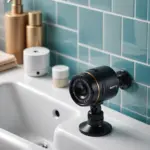
Some properties call for a less prominent installation. Compact camera modules may be fitted into a gate structure, wall, or outdoor lighting housing, provided the equipment has suitable outdoor protection and a clear view. Discreet placement should not be confused with recording private spaces: the camera must still be positioned responsibly and used within applicable privacy rules.
For longer driveways or several separate zones, more than one fixed camera may produce better results than a single device. A pan-tilt-zoom camera can also be considered where remote movement and zooming are useful, although a fixed camera may provide more consistent coverage of a specific area.
Wired, wireless, and app-connected systems
Wired CCTV is often a strong choice for continuous monitoring. Power over Ethernet (PoE) can carry power and data through a network cable, helping provide a stable connection for high-resolution recording. A wired installation may require more work initially, especially across a long driveway, but it avoids dependence on wireless signal strength at the camera location.
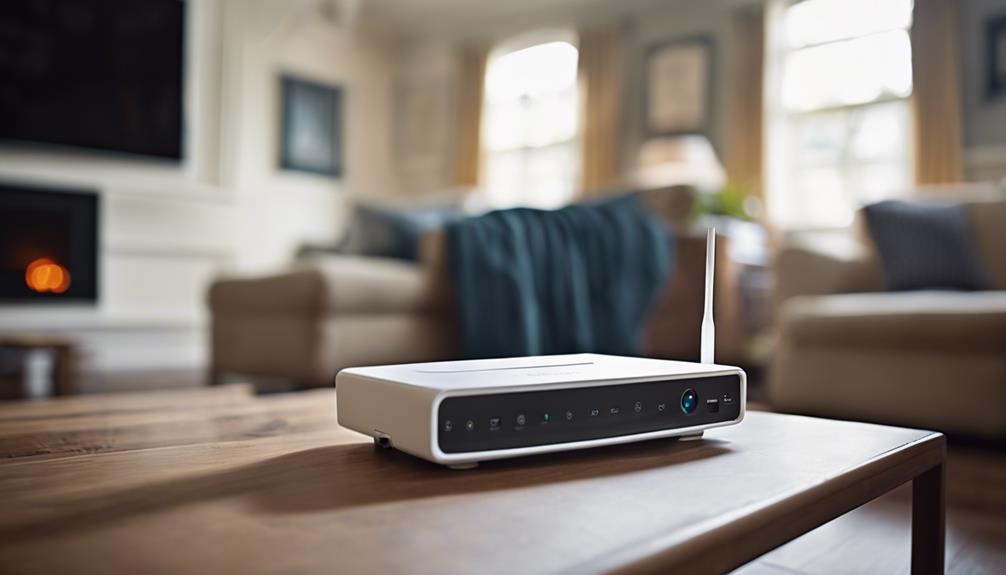
Wireless cameras are easier to position where running cable is difficult. Before choosing one, check that the Wi-Fi signal reaches the intended mounting point and consider how the camera will receive power. Battery and solar-powered options can help in areas without a convenient electrical supply, but battery life, sunlight, and weather exposure need regular attention.
An outdoor security camera with app access may provide live viewing, motion alerts, two-way audio, and access to stored recordings. These features are useful, but the system should have strong account security, encryption where available, and regularly updated firmware. Notifications should also be tested so that important events are not missed or overwhelmed by false alerts.
Positioning for useful footage
Good placement matters as much as the camera’s resolution. Mount the unit high enough to reduce the risk of tampering, but do not angle it so steeply that faces and vehicle details become difficult to identify. A camera facing along the driveway can show movement and vehicle direction, while a second camera aimed toward the entrance may produce better face-level images.
Take changing light into account. Headlights, low winter sun, shadows, and darkness can affect image quality. Infrared night vision or additional lighting may improve visibility, but lights should not be aimed into neighboring properties or public areas unnecessarily. Test the view at different times of day before finalising the installation.
- Check the full approach, parking area, gate, and delivery location.
- Avoid excessive sky or empty ground in the frame.
- Confirm that the camera can capture useful detail at the distance required.
- Keep neighboring windows, gardens, and other private areas outside the view where possible.
- Secure cables and mounting hardware against weather and accidental damage.
Storage, power, and reliability
Recordings can usually be stored locally, such as on a microSD card or network video recorder, or remotely through a cloud service. Local storage may avoid ongoing subscription costs and can work well with a wired system. Cloud storage provides an off-site copy, which may be valuable if the camera or recording equipment is stolen or damaged. Whichever method you choose, check how long footage is retained and how easily important clips can be exported.
For exposed installations, select equipment intended for outdoor use. A weather-resistant enclosure, including products rated IP66 or higher where appropriate, can help protect against dust and water. Reliable power is equally important: a camera that frequently loses power or connection cannot provide dependable evidence.
Privacy and responsible use
Before installing driveway CCTV, check the rules that apply in your location. Recording video on your own property may be treated differently from capturing public areas or neighboring land, and audio recording can have additional restrictions. Disable audio if it is not needed, and avoid directing the camera toward private spaces such as windows or enclosed yards.
Use strong, unique passwords, limit access to trusted users, and keep recordings secure. Where local requirements call for surveillance notices or signage, provide them clearly. A system that is carefully positioned and transparently operated is more useful—and less likely to create privacy disputes—than one aimed broadly at surrounding properties.
Planning a practical driveway CCTV setup
Start by identifying what needs monitoring: vehicles, deliveries, a gate, visitors, or a long approach. Then choose the camera type, power method, viewing angle, and storage arrangement around those needs. Test the image before completing the installation and review the system periodically to confirm that the lens, connections, alerts, and recordings still work as intended. With sensible placement and responsible operation, driveway CCTV can add focused coverage to a wider home security plan.