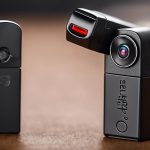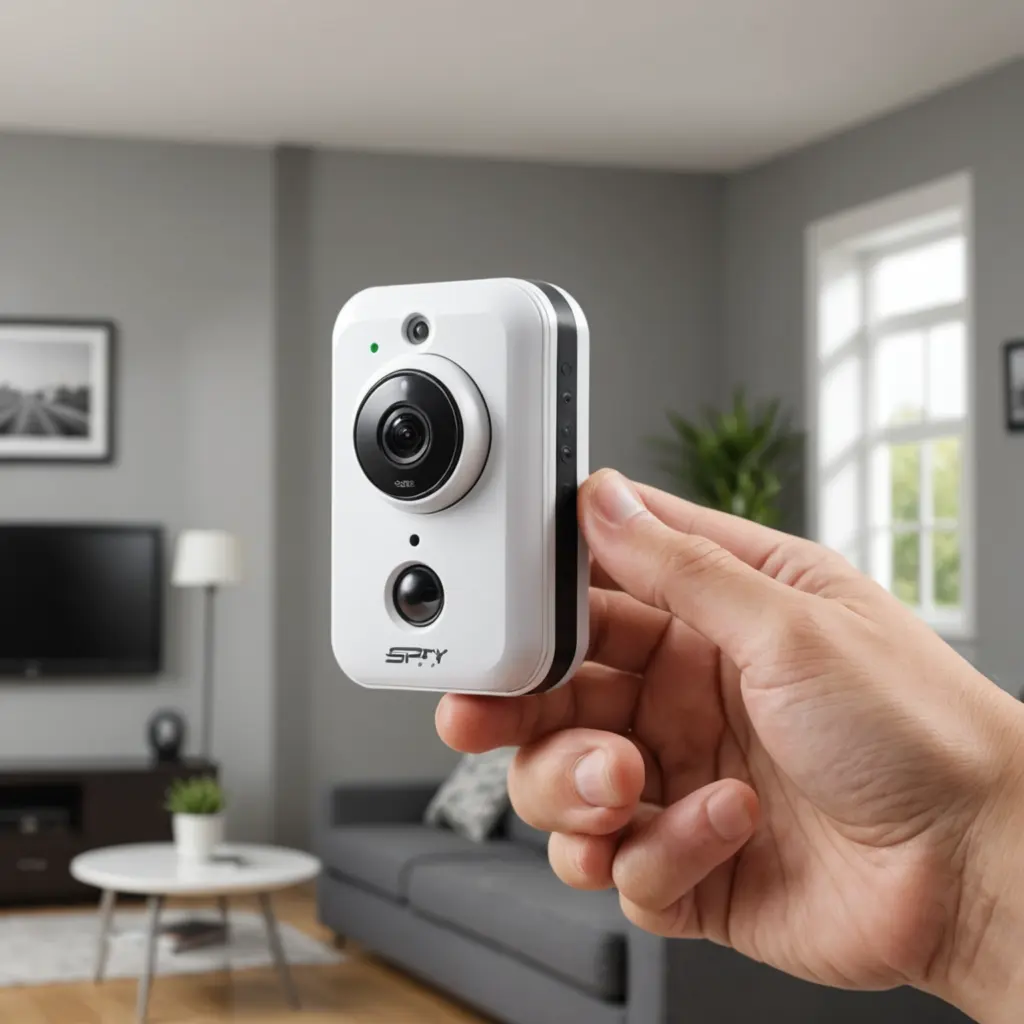

A GFCI outlet hidden camera is a surveillance device designed to resemble a ground-fault circuit interrupter outlet. Because it blends into a familiar wall fixture, it may be less noticeable than a conventional camera. Some models are decorative covers or plug-in devices, while others are designed to replace an outlet faceplate. Their capabilities can include motion-triggered recording, smartphone viewing, night vision, and local or remote storage.
Although an outlet-style camera can be useful in certain security applications, appearance should never take priority over electrical safety, privacy, or compliance with surveillance laws. Treat these products as cameras first and electrical devices second: understand how they are powered, what they record, and where their use is permitted before installation.
How a GFCI outlet camera works
Most outlet-style cameras place a small lens behind an opening in the casing, such as a screw hole or edge detail. The camera may receive power from a nearby receptacle, an internal battery, or a purpose-built electrical assembly. Wireless models commonly connect to a home or business network for live viewing, alerts, or remote access. Other versions record to onboard or removable storage.
Product names vary. You may see terms such as GFCI camera, GFCI outlet camera, or GFCI outlet spy camera. These labels do not necessarily indicate that the device is a genuine, code-compliant GFCI receptacle. Verify exactly what the product is before connecting it to an electrical system.
Common, lawful uses
An outlet-style camera may be considered for discreet security monitoring in places where recording is lawful and appropriate. Potential uses include observing an entryway, monitoring deliveries, checking activity in a shared living area, or protecting a small business reception or stockroom. A caregiver or childcare camera may also be used where required notices and consent rules are followed.
- Choose locations that do not create an expectation of privacy.
- Use visible notice or obtain consent when local law, workplace policy, tenancy rules, or the circumstances require it.
- Avoid bedrooms, bathrooms, changing areas, and other private spaces.
- Record only what is reasonably related to the security purpose.
- Protect stored footage and delete it when it is no longer needed.
Electrical safety comes first
A real GFCI receptacle is intended to help protect people from electric shock. Replacing, bypassing, or modifying one can remove that protection and may violate electrical requirements. Never open a live receptacle or attempt to install a camera inside a working GFCI mechanism unless the product is specifically engineered for that purpose and the work is performed by a qualified electrician.
The lower-risk options are generally devices that plug into an existing outlet without changing the wiring, or battery-powered units that do not require electrical work. Before purchasing, determine whether the product is a camera accessory, a complete receptacle, or a nonfunctional prop. If installation involves household wiring, consult a licensed electrician and confirm that the GFCI function remains operational.
Features worth comparing
The right specifications depend on the scene you need to monitor. Consider the following:
- Image quality: A clear image is more useful for identifying activity than a camera chosen solely for its disguise.
- Low-light performance: Night vision or effective low-light capture may be important in hallways and rooms with limited illumination.
- Motion detection: Event-based recording can reduce unnecessary footage and conserve battery or storage capacity.
- Alerts: Smartphone notifications can provide prompt warning when motion is detected, but they depend on reliable connectivity.
- Storage: Local recording may offer greater control over footage, while remote storage can support access away from the property. Review encryption and account-security practices before enabling cloud access.
- Power: Battery models simplify placement but require charging. Plug-in models can operate longer but must be used safely.
- Network security: Change default passwords, use a protected Wi-Fi network, and keep the camera’s software updated when updates are available.
Placement and limitations
An outlet is usually positioned low on a wall, which affects the camera’s perspective. A low mounting point may capture a person’s torso more easily than facial detail, particularly when someone stands close to the lens. Position the device toward an entrance, walkway, or other defined area, and check that furniture, trim, and plugs do not block the lens.
Before relying on the camera, test its field of view during daytime and nighttime conditions. A single concealed device rarely covers an entire property. For broader protection, it may be better to combine appropriately disclosed cameras with lighting, locks, alarms, or other security measures rather than depending on one hidden viewpoint.
Privacy, audio, and legal considerations
Surveillance rules differ by jurisdiction, and audio recording can be subject to stricter consent requirements than video. Recording employees, tenants, guests, caregivers, or children without appropriate notice may create legal and ethical problems even when the camera is installed in a private building. Rules may also apply to where footage is stored, who can access it, and how long it is retained.
Before installation, check applicable local and state requirements and seek legal advice for uncertain situations. Responsible use means limiting monitoring to a legitimate purpose, avoiding private areas, securing recordings, and being transparent whenever disclosure or consent is required.
Checking for an unauthorized outlet camera
If you suspect that a room contains a concealed camera, inspect unfamiliar outlets, covers, and wall fixtures for unusual openings, loose fitting, or unexpected modifications. A flashlight may reveal a reflective lens, while radio-frequency detection equipment can sometimes identify wireless transmissions. These methods are not conclusive, so preserve evidence and seek professional assistance if the concern involves a home, workplace, or rental dispute.
A GFCI outlet hidden camera can be part of a carefully planned security setup, but its discreet appearance does not remove the need for safe installation and lawful, respectful monitoring. Evaluate the device’s power design, recording features, placement, and privacy controls before using it.