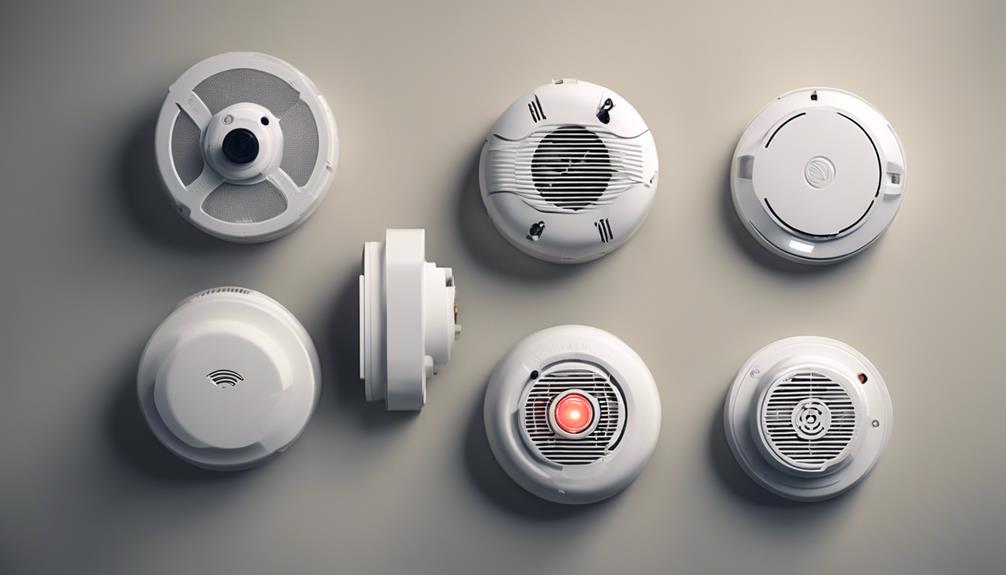

Smoke-detector-style cameras are designed to blend into a ceiling or wall while providing video monitoring. Their familiar appearance can make them less noticeable than a conventional security camera, but discreet design should never take priority over fire safety, privacy, or responsible use.
Because the supplied information does not identify specific models, the most useful way to compare the category is to examine the features that matter most. Use the following five checks when evaluating a hidden camera smoke detector for a home or small workspace.
1. Confirm that the device is suitable for fire safety
A camera housed in a smoke-detector-style enclosure is not automatically a reliable smoke alarm. Before installation, determine whether the product is actually intended and approved to serve as a life-safety detector. If that information is unclear, do not rely on it as your only fire protection.
- Keep properly functioning smoke alarms installed where required.
- Do not remove, cover, disable, or alter an existing alarm to make room for a camera.
- Check the manufacturer’s documentation for testing, maintenance, and alarm functionality.
- Choose a separate certified smoke detector if the camera product is intended only for surveillance.
2. Compare video quality and viewing coverage
Video quality determines whether recorded footage is useful. Look for clear image capture, adequate performance in the available lighting, and a viewing angle that covers the area you need to monitor. A wide view may show more of a room, while a narrower view can provide greater attention to a particular entrance or hallway.
Consider where the camera lens is positioned within the housing. A discreet enclosure is not helpful if the lens is partially blocked or pointed at a ceiling, bright window, or other area with limited security value. If the device offers sample footage, review it in conditions similar to your own home rather than relying only on marketing descriptions.
3. Check installation and remote-access requirements
Many network-connected cameras use Wi-Fi to provide live viewing through a phone or computer. Before buying, check whether the device requires a particular mobile app, a permanent power connection, or a nearby router. Installation should not interfere with the detector’s operation or require unsafe wiring.
Remote viewing is convenient, but it depends on a stable network connection and a functioning service. Review how the device behaves if the internet connection fails: some cameras may continue recording locally, while others may lose access to live video or alerts. Also check whether setup requires an account, a subscription, or additional storage fees.
4. Evaluate motion detection and recording controls
Motion detection can reduce unnecessary recording and make alerts easier to manage. Useful controls may include adjustable sensitivity, activity zones, scheduling, and notification settings. These options can help limit alerts caused by routine movement, changing light, or pets, although no detection system eliminates false alerts entirely.
Review how recordings are triggered and how long they are retained. Local storage, removable media, and cloud storage each involve different trade-offs involving access, capacity, reliability, and privacy. Make sure you understand whether older clips are automatically deleted and whether important footage can be exported in a usable format.
5. Protect privacy and secure the account
A concealed camera can capture people without their knowledge, so responsible use is essential. Laws concerning recording vary by location and may impose stricter requirements in bedrooms, bathrooms, rental properties, workplaces, or shared spaces. Obtain appropriate consent where required, and avoid monitoring areas where people reasonably expect privacy.
Security features matter just as much as image quality. Use a unique password, enable multi-factor authentication when available, keep the camera’s firmware and mobile app updated, and secure the Wi-Fi network. Review who has access to the account and remove old users promptly. If footage is uploaded to the cloud, read the provider’s storage and sharing terms before enabling the feature.
A practical way to choose
Start by deciding whether you need a genuine smoke alarm, a security camera, or both. In many homes, the safest approach is to use certified smoke alarms for fire protection and visible security cameras for monitoring. If you still consider a smoke-detector-style camera, verify its safety documentation, installation requirements, recording method, privacy controls, and ongoing costs before purchase.
The best option is not necessarily the most covert. It is the one that provides useful coverage without compromising fire protection, network security, or the rights of people who may be recorded.