
A bathroom is one of the places where privacy matters most. If you suspect that a camera has been installed without your knowledge, take the concern seriously—but approach the search methodically. A careful visual inspection can reveal tampering or an unfamiliar device, while detection tools and professional help may provide additional confidence.
Start with a careful visual inspection
Begin by studying the bathroom as a whole. Think about what normally belongs in the room and whether anything has recently appeared, moved, or been modified. Pay attention to objects with a clear view of the shower, toilet, changing area, or other private parts of the room.
Inspect potential hiding places without forcing or dismantling anything. Areas to check include:
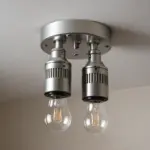
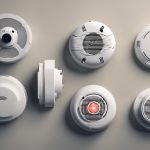
- Smoke alarms, light fittings, exhaust fans, and other ceiling fixtures
- Air vents and grilles
- Mirrors, frames, shelves, and wall decorations
- Tissue boxes, toiletry containers, and other small decorative items
- Speakers, air purifiers, clocks, and plug-in devices
- The space beneath or around sink cabinets
Look for small openings that could accommodate a lens, unexplained wires, loose covers, mismatched screws, fresh adhesive, or an object positioned unusually close to a power source. A camera does not have to be hidden inside a sophisticated device; an ordinary-looking item that has been altered may deserve closer attention.
Check mirrors and reflective surfaces carefully
Examine the edges, mounting points, and area behind a mirror if it can be inspected safely. Avoid damaging a fixed mirror or removing electrical fixtures. A mirror itself is not proof of surveillance, and simple online “finger tests” are not reliable enough to confirm whether a mirror is concealing a camera. Instead, look for unexplained gaps, holes, or equipment aimed toward the room.
Use a flashlight as a secondary check
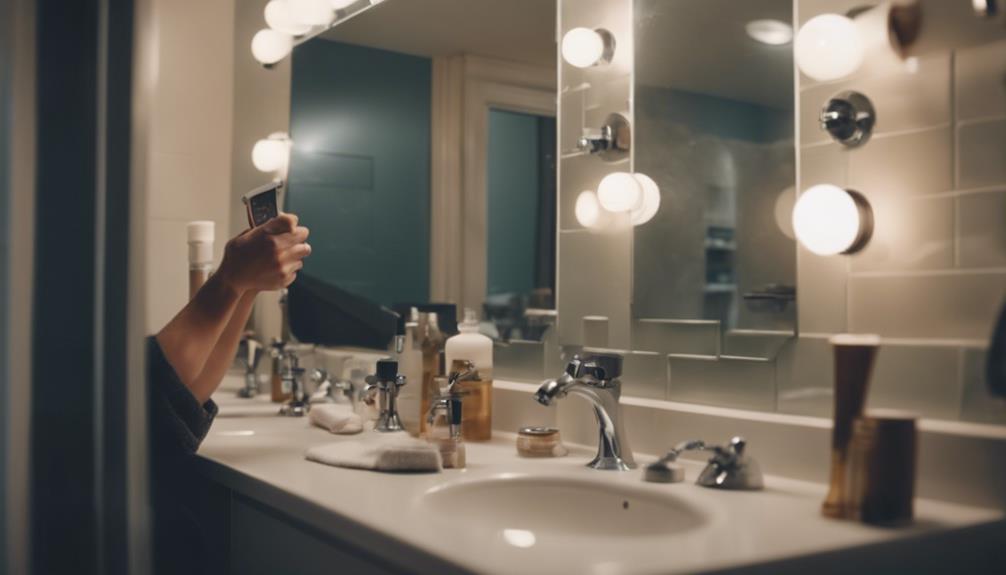
In a dim room, shine your phone’s flashlight slowly across likely surfaces from different angles. A camera lens may reflect a small, sharp glint. Check mirrors, glass, polished metal, vents, and dark openings while moving your phone rather than relying on one viewing angle.
This method can produce false positives. Reflections from ordinary screws, fixtures, water spots, and nearby lights may look suspicious, and some cameras will not be visible this way. Treat a reflection as a reason to inspect an object more closely—not as proof that a camera is present.
Consider electronic detection tools
Radio-frequency detectors may identify signals from some wireless devices, while optical lens finders can help reveal reflective lenses. These tools have limitations: a camera may be wired, inactive, recording locally, or outside the detector’s useful range. Other electronics in the bathroom can also trigger an RF detector.
If you use a detector, reduce unnecessary electronic activity where practical and follow the manufacturer’s instructions. Sweep systematically rather than waving the device randomly, and investigate repeated or unusually strong readings. Do not treat a silent detector as proof that the room is clear.
What to do if you find something suspicious
If an object appears to contain a camera, avoid touching, covering, unplugging, or destroying it unless there is an immediate safety reason. If you can do so without disturbing the scene, photograph the object and its surroundings, note the date and location, and leave the room. Consider using another private location while deciding what to do next.
Unauthorized recording in a bathroom may violate privacy and surveillance laws, but the rules vary by location. Contact local law enforcement or an appropriate privacy authority for guidance. If you are staying in rented accommodation, a hotel, or another managed property, notify the responsible operator in writing while preserving your own records. Do not confront a person you suspect if doing so could put you at risk.
When to hire a professional
A reputable technical surveillance specialist can conduct a more comprehensive inspection using visual, radio-frequency, and optical methods. This may be worthwhile when you find signs of tampering, have a continuing concern, or need documented results. Ask what equipment and methods are included, what the service costs, and how findings will be reported. Choose a provider carefully and avoid anyone who guarantees that every camera can be found.
Protect your privacy going forward
Keep track of unfamiliar items and changes to the room, restrict access when possible, and inspect new electronic devices before placing them in a private area. If you share a home or accommodation, discuss unexpected installations with the property owner or manager. A calm, documented inspection is more useful than repeatedly checking the same objects without recording what you found.