
A discreet security camera can help document activity around your property without becoming a visual distraction. However, concealment should never be used to invade someone’s privacy or bypass safety rules. Before choosing a hiding place, confirm that your intended monitoring is lawful, limited to a legitimate security purpose, and designed to protect people as well as property.
Start with privacy and legal considerations
Surveillance laws vary by country, state, and municipality, so check the rules that apply to your location before installing or concealing a camera. Video and audio may be governed by different requirements. Audio recording can be especially sensitive, and some jurisdictions require consent from everyone involved in a conversation.
Do not aim a camera at places where people reasonably expect privacy, including bathrooms, changing areas, bedrooms, or a neighbor’s private interior space. Also consider whether the camera captures more of a shared hallway, sidewalk, or neighboring property than is necessary. If the legal position is unclear, seek advice from a qualified local attorney rather than relying on a general online guide.
Choose an appropriate camera and location
Select equipment that matches the area you need to monitor. A compact camera may be suitable for an entrance, hallway, garage, or other space that you own or are authorized to monitor. For outdoor use, choose a weather-resistant model intended for exterior installation.
Concealment should reduce visual prominence, not turn the device into a covert tool for monitoring private activity. Suitable approaches may include:
- Positioning a camera behind ordinary décor or within a bookshelf arrangement in a room you control.
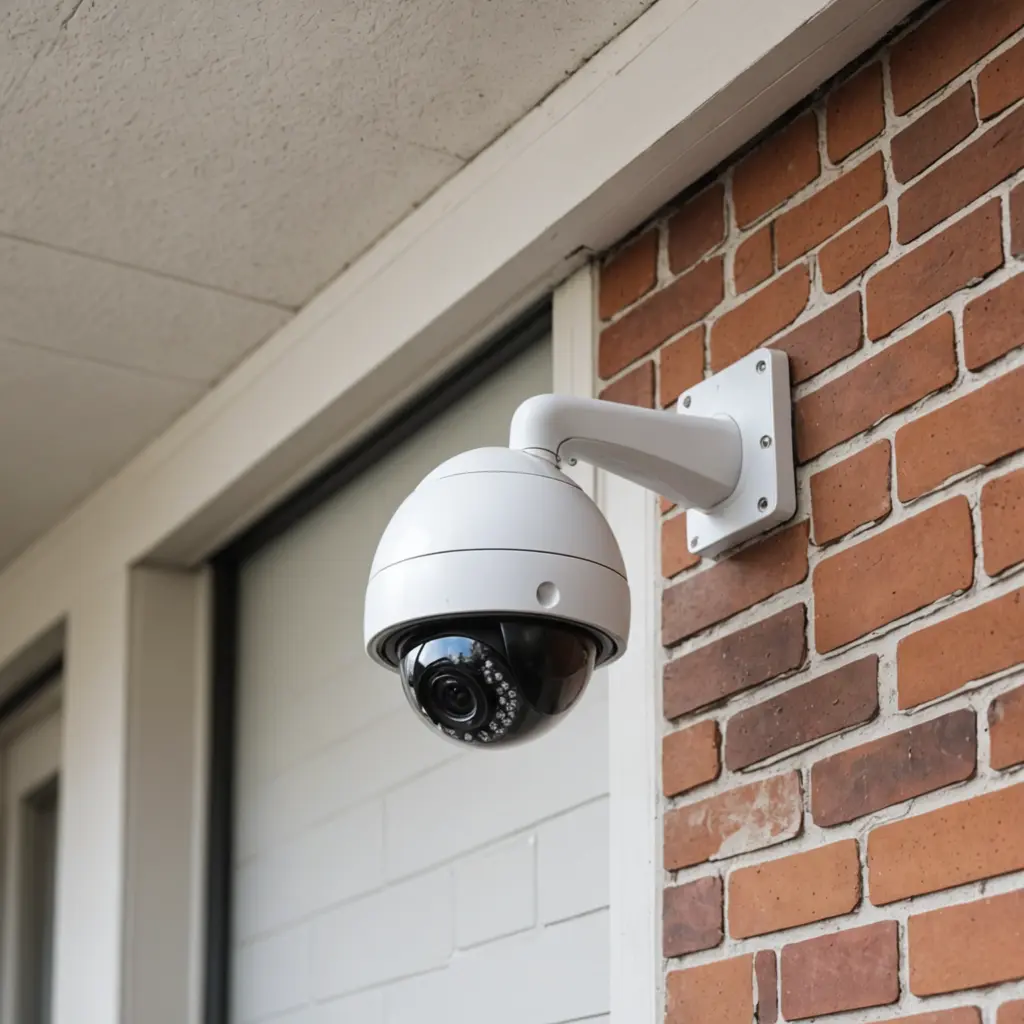
- Mounting an exterior camera beneath an eave or within a soffit while keeping the lens directed at your own property.
- Using a discreet wall-mounted installation near an entrance, driveway, or other access point.
- Placing the device where it is less exposed to tampering without obstructing its view.
Do not place a camera inside an object if doing so makes its purpose misleading to people who have a right to know about monitoring. In shared homes, rental properties, workplaces, or multiunit buildings, clear notice and consent may be required.
Protect the camera’s performance and physical safety
A hidden camera still needs a clear view, adequate ventilation, and a reliable power source. Leave the lens unobstructed and check that decorative materials do not block motion detection, night vision, or microphones. Avoid enclosing a device so tightly that it overheats.
Never hide a camera inside a smoke detector, fire alarm, light fixture, or another safety-critical fitting. Altering such equipment can interfere with building or fire safety. Do not route cables through walls casually, either. Use suitable cable paths and electrical components, and hire a qualified installer or electrician when wall work or mains power is involved.
For wireless devices, check signal strength at the planned location. For battery-powered cameras, establish a maintenance schedule so the battery does not fail when footage is needed. Outdoor installations should also be checked for moisture, insects, dirt, and changes caused by wind or vibration.
Be transparent where people may be monitored
Discreet placement does not eliminate the responsibility to inform people. In shared or managed properties, explain where cameras are located, what areas they cover, whether audio is enabled, how footage is used, and who can access it. Written notices, property rules, or lease terms may be appropriate depending on the situation.
For a private home, consider telling regular visitors, household members, contractors, and service workers that security cameras are in use. Disable audio when it is unnecessary, and avoid recording beyond your property line whenever possible. Transparency can prevent misunderstandings and helps keep a security system focused on its legitimate purpose.
Secure and manage recorded footage
Camera placement is only one part of responsible surveillance. Protect the recordings and the account used to access them:
- Use a strong, unique password and enable two-factor authentication when available.
- Install firmware and software updates from the manufacturer.
- Choose secure connections and encryption features where supported.
- Limit access to people who genuinely need it.
- Set a retention period and delete footage that is no longer necessary.
- Share recordings only for legitimate reasons, such as reporting an incident or resolving a property dispute.
Before sharing footage, consider whether uninvolved people can be blurred or otherwise protected. Keep a simple record of significant downloads, disclosures, and maintenance actions so you can explain how the system is operated if questions arise.
Review the installation regularly
Inspect the camera periodically to confirm that it has not shifted toward a private area or begun recording more than intended. Clean the lens, test motion detection and night vision, check the power supply, and review access settings. If the law, property use, or household arrangements change, adjust the camera, disable unnecessary features, add notice, or remove the device.
The safest discreet installation is one that protects your property without concealing activity from people who have a right to privacy. Keep the camera’s purpose narrow, use safe equipment, secure the footage, and treat legal compliance and clear communication as part of the installation—not as afterthoughts.