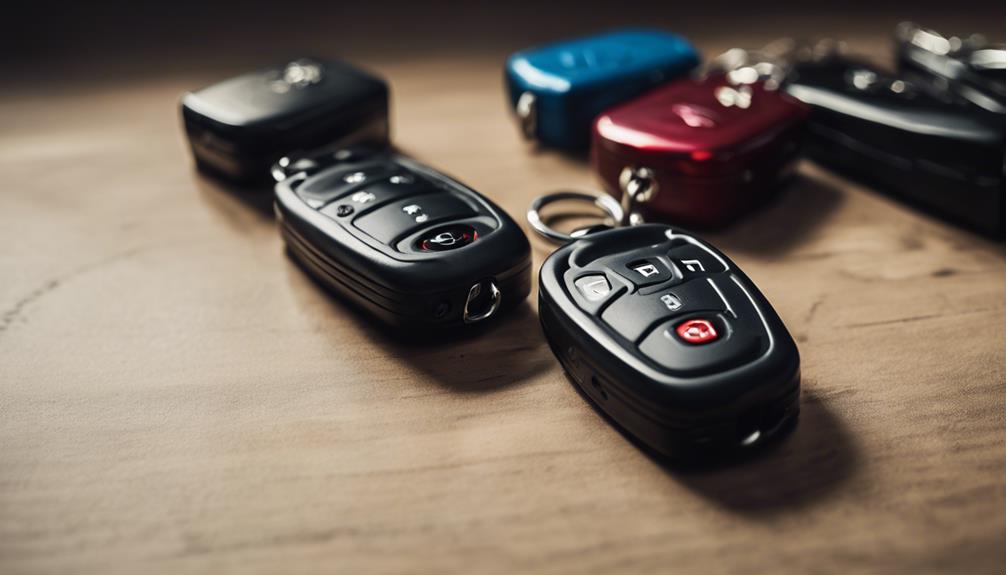

Key fob cameras combine a familiar everyday form with compact video or audio-recording hardware. Their small size can be useful for documenting your own property, recording an interaction with permission, or improving personal security without carrying a conventional camera. However, discreet equipment should never be used to invade someone’s privacy. Check local rules before recording, especially when audio is involved, and obtain consent whenever required.
How to Choose a Key Fob Camera
The best option depends less on appearance than on the way you intend to use it. Before buying, consider image quality, lighting conditions, recording controls, battery life, storage, and whether the device includes audio. A small camera may be convenient, but its compact design can also mean limited controls, shorter recording times, and a smaller lens than a standard camera.
1. Mini Key Fob Camera with 1080p Video
A mini key fob camera advertised with 1080p resolution is designed for users who want a compact recorder capable of producing relatively detailed video. Higher resolution can make faces, objects, and other visual details easier to review than footage captured at a lower setting, although final clarity also depends on lighting, lens quality, movement, and compression.
This type of camera is most suitable when portability and discretion matter. Look for simple recording controls and a design that can be carried naturally with keys or other everyday items. Confirm how files are saved and transferred before relying on the camera for important documentation.
2. Wireless Key Fob Camera with Motion Detection
A wireless key fob camera with motion detection can begin recording when movement is detected instead of recording continuously. This may help conserve storage and battery power while focusing on activity in the camera’s field of view. Some devices in this category may also support remote viewing, but wireless features should be checked carefully because connectivity, range, setup, and app compatibility vary by device.
Motion detection is not a guarantee that every event will be recorded. Fast movement, poor positioning, obstructions, and sensitivity settings can affect performance. Test the detection range in the intended location, and use the feature only in areas where monitoring is permitted.
3. Key Fob Camera with Night Vision
Night vision is useful when a camera must operate in dim rooms or after dark. A key fob model with this feature can extend recording beyond well-lit daytime conditions, making it a practical choice for permitted security monitoring around a home, office, or personal belongings.
Night vision footage should be evaluated in the actual environment rather than assumed from a product description. Walls, glass, distance, reflective surfaces, and ambient light can all affect results. If nighttime detail is important, test the camera at the distance and lighting level where it will be used.
4. Keychain Camera with a Wide-Angle Lens
A wide-angle lens captures more of the surrounding scene than a narrower lens. That can be helpful when documenting a room, entrance, or other confined area where a broader view is more valuable than close-up detail. A keychain-style camera also offers a portable format for lawful, consent-based recording while travelling or inspecting property.
Wider coverage can introduce trade-offs. Objects near the edges may appear distorted, and subjects may look smaller in the frame. Position the camera carefully, keep the lens unobstructed, and review sample footage to confirm that the important area remains visible.
5. Rechargeable Key Fob Recorder with Audio
A rechargeable key fob recorder with audio is intended for situations where sound is as important as video. A built-in rechargeable battery can be more convenient than disposable cells, while one-button controls may make starting and stopping a recording straightforward.
Audio recording requires particular caution. Laws differ by location and may require the knowledge or consent of everyone being recorded. Do not assume that a small recorder can legally capture private conversations simply because it is easy to carry. If audio is unnecessary, disabling it may reduce privacy risks.
Important Checks Before Use
- Review local privacy, workplace, property, and audio-recording laws.
- Obtain consent when required and avoid bathrooms, bedrooms, changing areas, and other private spaces.
- Check battery capacity, charging time, storage limits, and file-transfer methods.
- Test video, audio, motion detection, and low-light performance before an important recording.
- Protect recordings with secure storage and limit access to people who need them.
Final Considerations
Each key fob camera category serves a different purpose: 1080p models prioritize compact video detail, motion-activated cameras reduce unnecessary recording, night-vision models support low-light use, wide-angle cameras cover more of a scene, and rechargeable audio recorders capture sound as well as images. Choose based on the conditions you can verify, and use the device only for transparent, lawful monitoring that respects other people’s privacy.