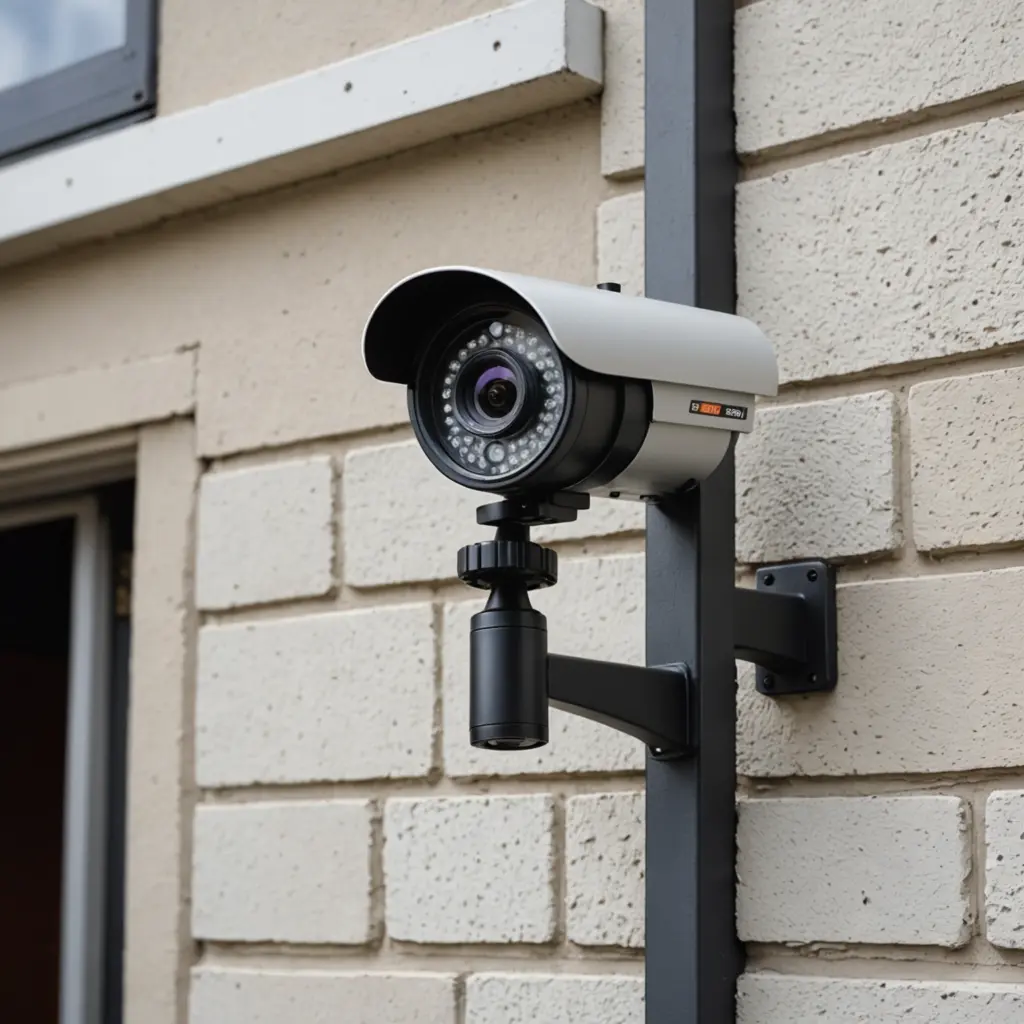

Long-range security cameras are designed for locations where important activity may occur far beyond the reach of a standard home or business camera. They can help monitor rural properties, industrial perimeters, access roads, large parking areas, and other expansive spaces while reducing the number of cameras needed for broad coverage. Research into long range surveillance shows miniaturized recording features and stealth technology integration.
Distance alone does not determine whether a camera is effective. The system must preserve enough detail to identify a person, vehicle, or event at the required range, both during the day and in difficult lighting. Choosing the right optics, sensor, mounting position, and recording setup is therefore essential.
What makes a camera long-range?
A long-range camera combines a narrow field of view with optics and image processing capable of maintaining useful detail at a distance. The most important specifications include:
- Optical zoom: Optical magnification uses the lens to enlarge a subject without the quality loss associated with digital zoom.
- Focal length: A longer focal length provides a tighter view of distant areas, while a shorter focal length covers more surroundings.
- Sensor size and resolution: A capable sensor helps retain detail in low light, while higher resolution provides more information for viewing and cropping.
- Low-light performance: Noise reduction and light-sensitive sensors can make nighttime footage more usable.
- Pan, tilt, and tracking: Motorized movement and subject tracking can help operators follow activity across a large scene.
Marketing terms such as “long distance” do not guarantee that a camera can identify faces or license plates at a particular range. Always compare the manufacturer’s stated detection, recognition, and identification distances with the actual conditions at the installation site.
Night vision and image quality
Nighttime performance depends on the environment and the type of detail required. Infrared illumination can make nearby and moderately distant subjects visible in darkness, but its useful range depends on the illuminator, weather, and scene reflectivity. Reflective surfaces such as walls, glass, or signs may produce glare that reduces image quality.
Some systems rely on highly sensitive low-light sensors, while others use thermal imaging to show heat differences rather than visible-light detail. Thermal cameras can help reveal movement in darkness or poor visibility, but they may not provide the same facial or vehicle detail as a conventional camera. Select the technology according to whether your priority is detection, tracking, or identification.
Common applications
Long-range security cameras are useful wherever a wide area must be observed from a limited number of mounting points. Typical applications include:
- Monitoring fences, gates, driveways, and isolated buildings on rural properties
- Watching industrial sites, storage yards, loading areas, and vehicle entrances
- Covering large parking areas, road approaches, and transportation facilities
- Observing parks, conservation areas, or wildlife locations from a distance
- Supporting incident review when activity occurs beyond the coverage of ordinary fixed cameras
In some deployments, a long-range camera works best as part of a larger system. Wide-angle cameras can provide an overview, while a motorized zoom camera supplies closer detail when an event is detected.
How to choose the right camera
Begin by defining the farthest area that must be monitored and the type of evidence you need. Detecting movement requires less detail than identifying a person or reading a license plate. Consider the distance, lighting, weather, obstructions, and likely direction of travel before selecting the lens. For perspectives beyond fixed surveillance, compare GoPro Hero performance in our review of rugged action filming.
For outdoor use, choose a housing designed to withstand rain, dust, temperature changes, and the conditions specific to the site. Power over Ethernet can simplify fixed installations by carrying power and network data through one cable. Wireless or cellular connectivity may be useful where cable installation is impractical, but signal reliability and power requirements should be assessed carefully.
Also review recording options. Local or edge storage can continue recording if the network connection is interrupted, while centralized or cloud storage may simplify access and backup. Use strong account credentials, encryption where available, controlled user permissions, and firmware updates to protect recorded footage.
Installation and maintenance tips
Install the camera with the clearest possible line of sight. Remove or avoid trees, fences, roof edges, and other obstacles that can block distant subjects. A higher mounting point may provide a broader view, but an excessively high angle can make it harder to capture useful facial or plate detail. Test the view at the actual target distance rather than relying only on a live image from nearby.
Adjust focus, exposure, and zoom during both daylight and nighttime conditions. Check how headlights, direct sunlight, rain, fog, and reflective surfaces affect the image. If the camera uses infrared lighting, confirm that the beam reaches the intended area without causing glare.
Regularly clean the lens, inspect mounting hardware and weather seals, verify recording and alerts, and install trusted firmware updates. Review motion-detection settings after installation so that distant activity produces useful notifications without overwhelming operators with false alarms.
Privacy and lawful use
Long-range surveillance can capture areas beyond the property where the camera is installed. Before deployment, follow applicable privacy, recording, and data-retention requirements. Avoid aiming cameras into places where people have a reasonable expectation of privacy, restrict access to footage, and provide notice where local rules require it.
A successful long-range camera installation is a combination of suitable optics, realistic distance expectations, careful placement, reliable recording, and responsible operation. Matching the technology to the scene and maintaining it over time will produce more dependable coverage than choosing a camera based on zoom claims alone.