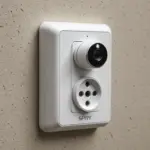

Outlet spy cameras are designed to resemble ordinary electrical outlets while recording video from an inconspicuous position. Their familiar appearance makes them less visually intrusive than conventional cameras, which is one reason they have attracted interest for home, office, and property-security applications.
Although these devices can offer useful monitoring capabilities, they should be selected and used carefully. Image quality, motion detection, remote access, installation requirements, and privacy obligations all affect whether an outlet-style camera is appropriate for a particular setting.
Why outlet-style cameras attract attention
The main appeal of an outlet spy camera is its discreet form factor. Because it is designed to blend with a wall or power strip, it may avoid the visual disruption associated with a visible security camera. This can be useful when the goal is to monitor a room without making the camera the focal point.
Depending on the model, an outlet camera may provide features such as:
- High-definition video recording
- Motion-activated recording
- Live viewing through a connected phone or computer
- Recorded-footage playback
- Flexible placement near entrances, work areas, or other points of interest
Feature availability varies between products, so specifications should be checked rather than assumed. A discreet design does not automatically mean that a camera provides strong coverage, reliable connectivity, or usable footage in low-light conditions.
Common surveillance uses
Home security
An outlet-style camera can be positioned to observe an entrance, hallway, or shared area. Motion detection may help limit recording to periods when activity occurs, making it easier to review footage. Remote access can also allow a homeowner to check a property while away, provided the camera and network connection are functioning properly.
Workplace and property monitoring
In an office, shop, or other property, a camera may help document activity around an access point or sensitive area. It can supplement visible security measures, but it should not be treated as a replacement for sensible access control, lighting, alarms, or clearly defined security procedures.
Checking on household activity
Some people consider discreet cameras for checking on pets, deliveries, or activity in a shared living space. These uses still require care, especially where other adults, visitors, tenants, employees, or service providers may be recorded.
Remote monitoring and recorded footage
Remote monitoring is one of the more useful capabilities associated with connected outlet cameras. A compatible device may provide a live feed or allow users to review stored clips from a distance. This can make it easier to check whether movement occurred at a property without being physically present.
Before relying on remote access, consider how footage is stored and transmitted. Important questions include whether recordings are saved locally or through an online service, how long they remain available, who can access the account, and what happens if the internet connection fails. Strong account credentials and updated device software can help reduce avoidable security risks.
What to consider before choosing one
- Viewing angle: Confirm that the camera can cover the intended area without being obstructed by furniture or wall fixtures.
- Video quality: Higher resolution may make details easier to identify, but it can also require more storage and bandwidth.
- Motion detection: Check whether sensitivity and activity zones can be adjusted to reduce unnecessary alerts.
- Power and installation: Determine whether the device uses a working outlet, a battery, or another power arrangement, and ensure installation does not create an electrical hazard.
- Night performance: If monitoring is needed after dark, review the product’s low-light capabilities instead of assuming they are included.
- Storage: Understand the recording format, storage capacity, retention period, and export options.
- Connectivity: A remote-viewing feature is only useful if the camera maintains a dependable connection.
Privacy and lawful use
Discreet surveillance carries significant privacy responsibilities. Laws and regulations concerning audio recording, video surveillance, workplaces, rental properties, and private spaces differ by location. Recording people without appropriate notice or consent may be unlawful, particularly in bedrooms, bathrooms, changing areas, or other places where privacy is expected.
Use an outlet camera only for a legitimate security purpose, avoid private areas, and provide notice or obtain consent when required. Audio recording deserves particular caution because it may be governed by rules different from those applying to video. When the situation is unclear, seek qualified legal advice before installing or activating the device.
A discreet tool, not a complete security plan
Outlet spy cameras can combine unobtrusive placement with features such as motion detection, remote viewing, and recorded video. Those advantages may make them useful for limited monitoring tasks, but their value depends on sensible placement, dependable operation, secure account management, and responsible use.
Used lawfully and with respect for privacy, an outlet-style camera can complement broader security measures. It should form part of a considered plan rather than serve as the only safeguard for a home, workplace, or property.