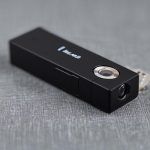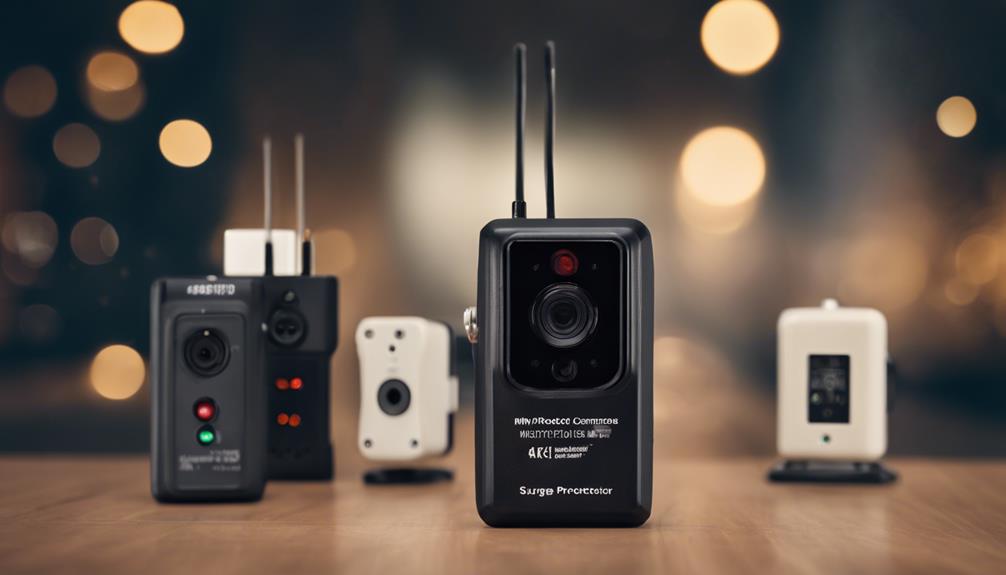

The smallest video cameras can fit into equipment, inspection tools, wearable devices, and compact security systems where a conventional camera would be too large. Their size makes them useful in tight spaces and low-profile installations, but miniaturisation also introduces compromises in image quality, battery life, heat management, and storage.
Rather than choosing a camera solely because it has the smallest housing, compare the complete system: lens, sensor, power source, recording method, mounting options, and the conditions in which it will operate.
What makes a video camera small?
A miniature camera is more than a tiny lens. Its housing must accommodate the image sensor, processing electronics, connection hardware, storage or wireless components, and often a battery. A camera module may be only a few millimetres wide when separated from its power and recording equipment, while a ready-to-use camera is usually larger because it includes those additional parts.
The sensor and lens strongly affect the result. Very small sensors and pinhole-style lenses help reduce the camera’s footprint, but they generally collect less light. That can produce more image noise, less detail in shadows, and a narrower useful range between bright and dark areas. In good lighting, a miniature camera may perform adequately; in darkness or high-contrast scenes, a larger camera often has a clear advantage.
Common miniature camera formats
Pinhole and board cameras
Pinhole cameras use a very small lens opening and are commonly built into compact boards or custom equipment. Their small front profile can be useful for inspection systems, robotics, and other legitimate applications where space is restricted. They still require careful attention to lens alignment, focus, and the surrounding enclosure.
Small square camera modules
A small square or cube-shaped module is a practical compromise between size and usability. Its flat sides make it easier to attach to a drone, prototype, vehicle, or other device. These modules may support onboard recording, a wired connection, or wireless video, depending on the design.
Compact action-style cameras
Small action-style cameras are generally larger than bare modules but easier to operate. They may include a protective casing, built-in controls, a rechargeable battery, and removable storage. This format is often more suitable when the camera must be moved between locations or used outdoors.
Inspection and specialty cameras
Some miniature cameras are designed to reach narrow cavities, pipes, machinery, or other areas that are difficult to view directly. In these systems, the camera head may be tiny while the display, cable, and battery remain outside the inspection area.
Where the smallest video cameras are useful
Miniature cameras have applications in several fields, including:
- Inspection: Viewing the inside of equipment, narrow openings, pipes, and mechanical assemblies.
- Robotics and drones: Reducing payload weight and making it easier to install a camera in a compact frame.
- Home and property security: Monitoring an entrance or room with equipment that does not dominate the surrounding space.
- Care and household monitoring: Checking on pets or dependants when an unobtrusive, openly installed camera is appropriate.
- Research and wildlife observation: Recording in locations where a larger device could disturb the subject or fail to fit.
- Creative projects: Capturing viewpoints that are impractical with a full-size camera.
For security use, visible placement and clear notice are often preferable to concealment. A small camera can be discreet without being secretly installed.
Key trade-offs to evaluate
Image quality: Resolution alone does not determine useful video. Sensor size, lens quality, lighting, focus, and image processing all affect clarity.
Low-light performance: Smaller sensors and lenses usually perform poorly in dim conditions. Infrared illumination or a larger sensor may improve night footage, but these additions can increase the camera’s size and power requirements.
Battery life: A very small housing leaves less room for a battery. Tiny standalone cameras may need frequent charging, while camera modules may rely on an external power supply.
Heat and recording time: Compact enclosures have less space to dissipate heat. Continuous recording, wireless transmission, and high-resolution processing can make this limitation more noticeable.
Storage and connectivity: Some cameras save footage to removable storage, while others send compressed video over a wired or wireless connection. Streaming can simplify remote viewing but may reduce quality or increase power use.
Mounting and operation: Check whether the camera includes a secure mount, adjustable lens, weather protection, remote controls, or a suitable connection for the intended equipment.
How to choose the right miniature camera
Start with the environment rather than the advertised dimensions. For a well-lit indoor inspection, a small module may be sufficient. Outdoor or low-light work may justify a larger sensor, infrared lighting, weather protection, and a bigger battery. Decide whether live viewing or local recording matters more, then confirm storage capacity, connection compatibility, expected runtime, and mounting requirements.
It is also worth testing the complete setup. A camera that looks impressive in a specification list may produce unusable footage when pointed toward a window, placed in a dark corner, or operated continuously inside a warm enclosure.
Legal and ethical considerations
Miniature cameras should be used only for lawful, proportionate purposes. Rules vary by location, but recording people in private areas such as bedrooms, bathrooms, and changing rooms without consent is commonly prohibited. Audio recording may be subject to separate restrictions, and workplace, rental-property, or shared-space monitoring may require notice or permission.
Before installing a camera, define its purpose, limit access to recordings, protect stored footage, and follow applicable rules for consent and retention. A compact camera can be valuable for inspection, safety, research, or openly managed security, but small size does not remove the privacy responsibilities that come with recording people.