
A small body camera can record hands-free video in situations where a conventional camera is inconvenient or too noticeable. However, the best device depends less on a dramatic product name and more on practical details such as image quality, battery life, storage, mounting, and the laws that apply where you plan to use it.
This guide explains the main features to compare when choosing a discreet body camera and highlights the privacy responsibilities that come with recording people or private spaces.
What to Look for in a Spy Body Camera
Image quality and low-light performance
High-resolution recording can make faces, documents, and other details easier to review, but resolution alone does not guarantee useful footage. Look for stable video, reasonable exposure, and clear results in the lighting conditions where the camera will be used.
Low-light performance is particularly important for evening or indoor recording. Some cameras include infrared or other night-vision modes, although these may produce monochrome footage and can affect battery life. Test the camera in realistic conditions rather than relying only on headline specifications.
Battery life and recording limits
A camera is of little use if it stops recording during an important event. Compare the expected recording time with your intended use, and remember that high-resolution video, infrared illumination, wireless connectivity, and motion activation can reduce runtime.
- Check whether the battery is built in or replaceable.
- Find out how long a full recharge takes.
- Confirm whether the camera can record while charging.
- Review how the device behaves when storage becomes full.
Storage and file security
Internal or removable storage determines how much footage you can keep before transferring files. Choose a system that makes it easy to copy recordings without accidentally overwriting them. A clear file-naming system and reliable date and time settings are also useful when reviewing multiple recordings.
If recordings may contain sensitive information, security matters as much as capacity. Use strong device passwords, protect transferred files, and choose encryption where it is genuinely supported. Wireless or remote-viewing features can be convenient, but they should be disabled when unnecessary and secured with unique login details.
Useful Body Camera Designs
Clip-on cameras
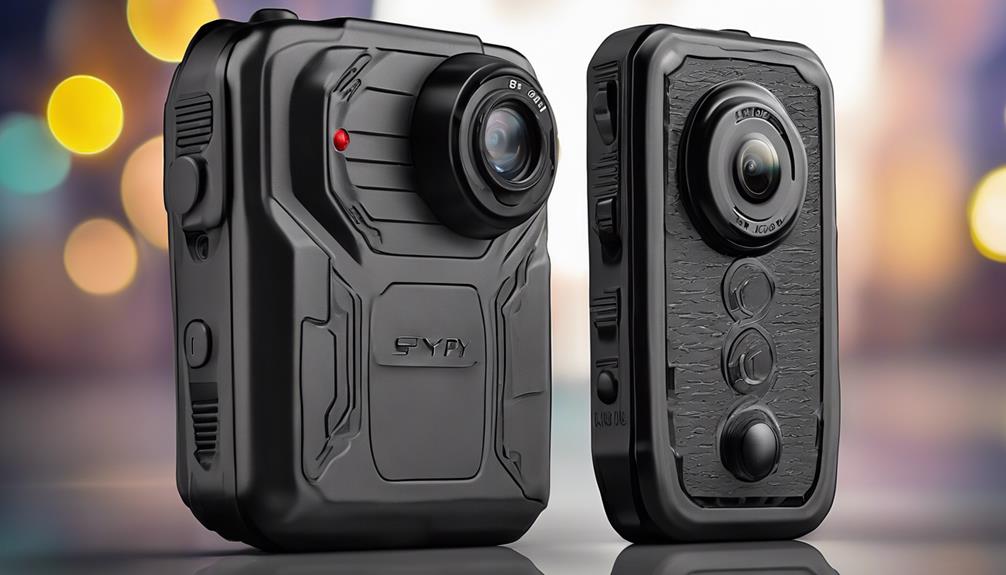
Clip-on models attach to clothing, a bag, or equipment and are generally easy to position. They are useful when a forward-facing viewpoint is needed, but a loose clip can cause shaking or point the lens toward the ground.
Wearable and disguised designs
Some compact cameras are built into clothing accessories or everyday-looking objects. Their small size may make them easier to carry, but it can also mean a smaller battery, limited controls, and less room for storage. A discreet appearance should never be treated as permission to record people without notice or consent.
Compact recorders with motion activation
Motion-activated recording can conserve storage and battery when the camera is monitoring a fixed area. It is less predictable for moving subjects, however, and may miss the beginning of an event. For continuous documentation, standard recording is usually easier to review.
Audio, Mounting, and Ease of Use
Video and audio laws are not always the same. A camera that records sound may create additional legal obligations, especially when conversations are private. Check local requirements before using any audio-recording function.
Mounting is another practical consideration. A stable position produces more useful footage than a camera that swings with clothing. Look for a secure clip, a clear lens position, simple one-button operation, and an indicator or setting that makes the recording status understandable without requiring constant handling.
Privacy and Legal Responsibilities
Discreet recording can be unlawful when used to intrude on private spaces, capture confidential conversations, monitor someone without a valid reason, or distribute footage without permission. Rules vary by location and may depend on where the camera is placed, whether audio is recorded, and whether the people being recorded have a reasonable expectation of privacy.
- Learn the recording and consent rules in your jurisdiction.
- Do not place cameras in bathrooms, changing areas, bedrooms, or other private spaces.
- Obtain consent when required, particularly for audio recording.
- Store footage securely and delete recordings that are no longer needed.
- Do not publish or share recordings merely because you captured them.
Choosing the Right Camera
Start with the legitimate task the camera must support, then compare battery life, low-light quality, storage, stabilization, mounting, and security. A modest camera with dependable controls may be more useful than a feature-heavy device that is difficult to operate or manage safely.
Used responsibly, a body camera can help document an interaction, support personal safety, or record hands-free activities. The goal should be reliable, proportionate recording—not secrecy for its own sake.