
Spy cameras with audio and video recording are available in many forms, from compact standalone devices to cameras built into everyday-looking objects. The right option depends on where recording will take place, how discreet the equipment needs to be, whether remote viewing is important, and how much storage or battery life is required.
Before choosing any covert recording device, check the laws that apply where you live. Recording video in a private space or capturing conversations without consent may be restricted or unlawful. Use these products only for legitimate, authorised purposes and respect people’s privacy.
What to Compare Before Buying
- Video quality: Higher-resolution footage can make faces, objects, and activity easier to identify, although it usually requires more storage.
- Audio recording: Check whether the device has a built-in microphone and understand the consent requirements for recording sound.
- Power: Battery-powered cameras are easier to position, while USB-powered models are better suited to continuous operation near an outlet.
- Storage: Recordings may be saved to internal memory, a removable card, or a connected device.
- Activation: Motion detection can reduce unnecessary footage and conserve battery life.
- Visibility and placement: A discreet design may be useful for authorised monitoring, but it should never be used to defeat reasonable privacy expectations.
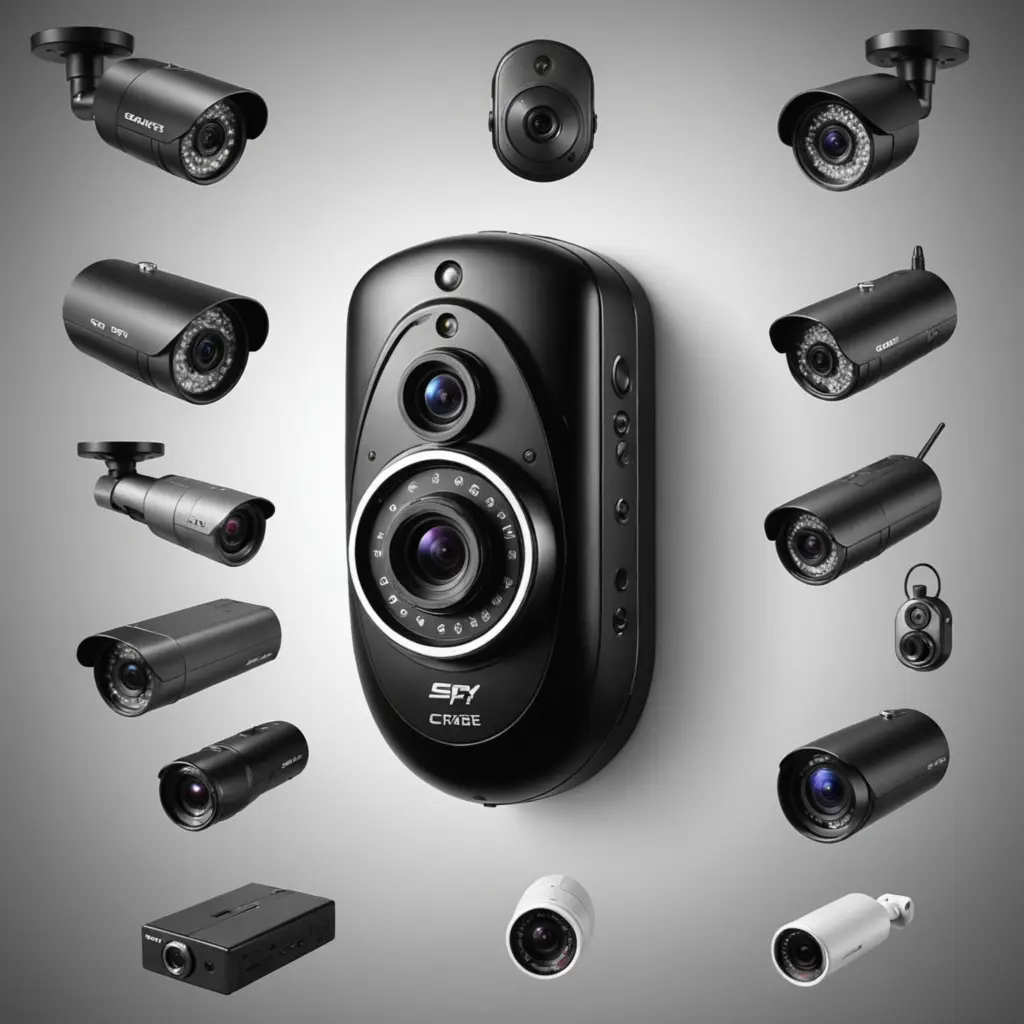
10 Spy Camera Types to Consider
1. Mini Camera With Audio Recording
Mini cameras are compact and can be positioned where a larger security camera would be impractical. Models with an integrated microphone record both visual activity and surrounding sound. Look for a clear lens, straightforward controls, dependable storage, and a battery suited to the intended recording period.
2. Hidden Camera With HD Video
A hidden camera with high-definition video is designed to blend into its surroundings while capturing more detailed footage than basic low-resolution equipment. Image clarity is particularly important when the recording may need to show small objects, movements, or identifying features. Installation should be secure and the camera should be aimed only at an authorised area.
3. Wireless Audio and Video Recorder
Wireless systems can transmit video and audio to a receiver, computer, or mobile device instead of relying on a direct cable connection. This can make placement more flexible, but performance depends on transmission range, interference, network conditions, and the receiving equipment. Confirm how recordings are stored and protected before selecting a wireless model.
4. Motion-Activated Spy Cam
Motion-activated cameras begin recording when movement is detected. This feature can save storage space and extend battery life compared with continuous recording. Check whether sensitivity can be adjusted, since pets, changing light, or passing traffic may trigger unwanted clips. Audio activation, where available, should be treated with particular care because sound-recording rules may differ from video rules.
5. Night-Vision Surveillance Camera
Night-vision cameras are intended for dim or dark environments. Infrared illumination can help produce usable footage when ordinary lighting is limited, though the resulting image may appear different from daytime video. When choosing one, consider the expected viewing distance, low-light performance, battery demand, and whether audio recording is genuinely necessary.
6. Portable Covert Camera
Portable cameras are useful for authorised monitoring in changing locations. Their small size makes them easy to carry, while features such as motion detection, rechargeable batteries, and removable storage can improve practicality. A portable design should not be confused with permission to record people in public or private settings without proper authority.
7. USB Charger Camera
A USB charger camera combines a charging accessory with a recording function. Because it can remain connected to power, this format may be suitable for longer monitoring periods than a small battery-only device. Confirm that the product is safe to use with the intended power source and that its camera angle does not capture areas where recording would be inappropriate.
8. Body-Worn Audio and Video Device
Body-worn cameras may be designed as compact wearable equipment or incorporated into items such as glasses, pens, or other accessories. They can document events from the wearer’s viewpoint, but audio recording is often subject to strict consent and privacy requirements. Consider video resolution, microphone performance, battery life, storage capacity, and whether the device clearly signals when recording is active.
9. Smoke Detector-Style Camera
A smoke detector-style camera is designed to resemble a standard ceiling-mounted detector. Some versions may offer remote viewing or scheduled recording, while others simply save footage locally. It should never replace a certified smoke alarm, and installation should be limited to spaces where monitoring is lawful and authorised.
10. Clock Radio Camera
A clock radio camera combines an everyday bedside or office accessory with a camera and, in some designs, a microphone. The format can be less visually intrusive than a conventional camera and may provide a continuous power connection. Use extra caution in bedrooms, changing areas, rented accommodation, or any location where people reasonably expect privacy.
Choosing a Responsible Recording Setup
Start with the legitimate purpose of the system rather than its appearance. Decide whether you need local recording or remote access, continuous or motion-triggered capture, daytime or low-light operation, and short-term or extended battery life. Protect stored files with strong account credentials and limit access to authorised users.
A discreet camera can be useful for approved security, documentation, or monitoring tasks, but concealment does not remove legal or ethical responsibilities. Use audio and video recording transparently where required, avoid private spaces, and select only the features necessary for the intended purpose.