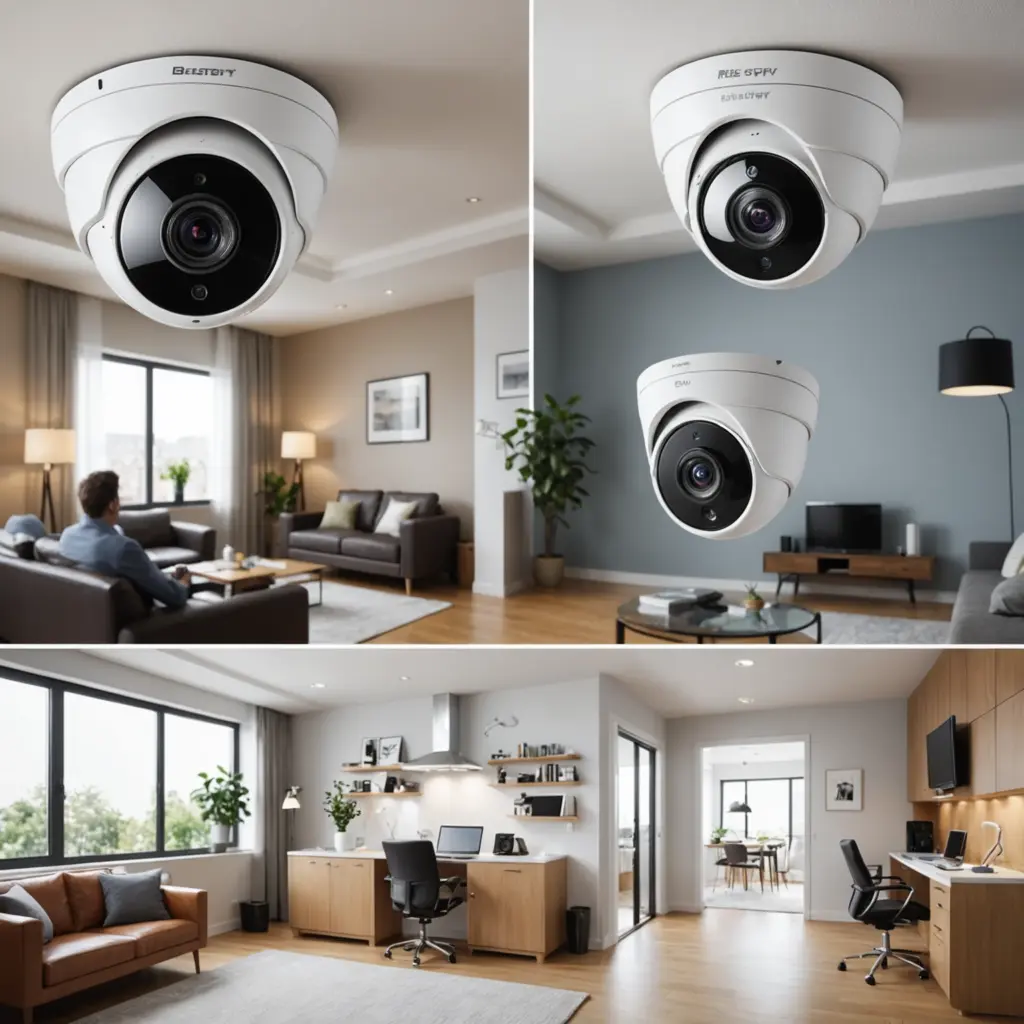

Indoor hidden cameras can provide discreet monitoring of entrances, shared living areas, valuables, pets, or vulnerable household members. Their small size and ordinary-looking designs make them less visually disruptive than conventional security cameras, but concealment also creates important privacy, security, and legal responsibilities.
The best choice is not necessarily the smallest camera. It is the device that provides a useful view, dependable recording, secure access, and a reasonable balance between monitoring needs and the privacy of people in the home.
When an indoor hidden camera may be useful
Discreet monitoring can help document occasional problems that are difficult to observe directly. Examples include unexplained activity near an entryway, suspected package or property theft, a pet’s behavior while you are away, or concerns about how a shared area is being used. A hidden camera may also fill a gap in a broader security plan when a prominent camera would be impractical.
However, concealment should not be treated as a reason to monitor every room or every person continuously. Visible cameras, door and window security, alarms, and good lighting can often provide stronger deterrence. Use a hidden camera for a clearly defined purpose and review whether less intrusive measures could solve the same problem.
Features to evaluate before buying
Image quality and viewing angle
Choose a resolution and lens that suit the room rather than focusing only on headline specifications. A wide-angle view can cover more of a small room, but excessive width may make faces or details appear smaller. Position the camera so that people pass through a well-lit part of the frame instead of relying on a distant or obstructed view.
Low-light performance
If the camera must operate after dark, check how it handles dim conditions. Infrared night vision can help in darkness, while a good low-light sensor may produce a more natural image when some ambient light is available. Test the view at night because reflective surfaces, glass, and nearby walls can interfere with infrared illumination.
Motion detection and alerts
Motion recording can reduce unnecessary footage and conserve storage. Look for adjustable detection zones and sensitivity settings so the camera does not constantly react to curtains, pets, heating vents, or changing light. Alerts are useful only when they are timely and manageable; excessive false alarms quickly make a system less effective.
Power, storage, and network security
- Power: Battery models are easier to place but require charging or battery replacement. Wired models are better suited to continuous operation, provided the power cable can be installed safely.
- Storage: Local memory can avoid a recurring service cost, while cloud storage may preserve footage if the camera is damaged or removed. Check retention limits and how recordings can be exported.
- Connectivity: Use a strong unique account password and enable two-factor authentication when available. Keep the camera and its companion app updated.
- Audio: A microphone introduces additional privacy and legal concerns. If sound is not necessary, consider disabling audio recording.
Common indoor hidden-camera designs
Discreet cameras may be built into ordinary-looking objects such as clocks, picture frames, chargers, or other household accessories. Small cube or compact cameras can also be placed on a shelf without drawing much attention. The design should match the room while still allowing the lens to maintain a clear, stable view.
Be cautious with devices that resemble safety equipment, such as smoke detectors. Installation in a ceiling can provide a broad perspective, but it may be difficult to service, reposition, or remove the camera. Do not modify or obstruct genuine safety equipment in a way that could affect its operation.
Placement and setup tips
Start by identifying the specific area or event you need to observe. Aim toward entrances, walkways, or valuable items, and avoid recording spaces where people reasonably expect privacy. Keep the lens free from plants, decorations, glass, and other objects that can block or distort the image.
After installation, test the camera during both daytime and nighttime conditions. Confirm that the date and time are correct, motion zones cover the intended area, and recordings can be retrieved. For a battery-powered device, create a charging schedule. For a wired camera, route cables safely and avoid creating a trip or fire hazard.
Review storage capacity regularly and remove footage that is no longer needed. Limit access to the people who genuinely require it, and avoid sharing recordings casually or uploading them to public platforms.
Privacy, consent, and legal considerations
Rules for video and audio surveillance differ by location. Areas such as bathrooms and private bedrooms generally carry a strong expectation of privacy and should not be used for concealed monitoring. Additional restrictions may apply when recording guests, tenants, domestic workers, caregivers, or other people who do not own the property.
Audio recording can be regulated more strictly than video, and consent or notification requirements may apply even inside a private home. Before installing a hidden camera, check the laws that apply where you live and consider informing household members and regular visitors. If the situation involves an employee, renter, caregiver, or dispute, obtain professional legal advice rather than relying on general online guidance.
Choosing the right approach
For occasional monitoring of one location, a compact camera with motion detection and local storage may be adequate. For longer periods or areas that require continuous coverage, dependable power and a clear plan for retaining footage matter more than concealment alone. In every case, secure the device, define what you are trying to protect, and use the least intrusive setup that meets that goal.
Used thoughtfully, an indoor hidden camera can support a layered home-security plan. Its value depends on reliable placement, maintenance, protected recordings, and respect for the privacy of everyone affected.