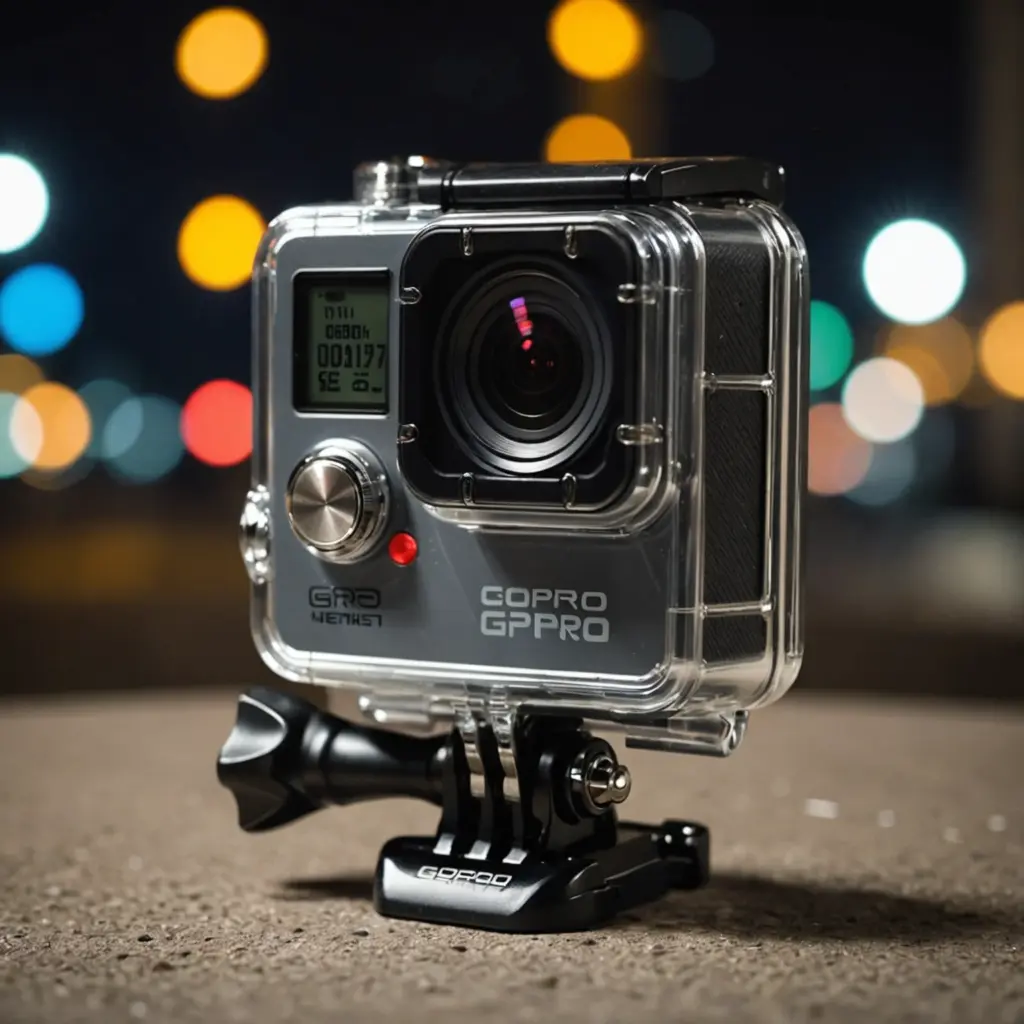

GoPro cameras are often considered for nighttime action, wildlife recording, camping, and even short-term monitoring. However, the phrase “GoPro night vision” can be misleading. A GoPro can capture useful footage in low light, but it does not provide true infrared night vision like a purpose-built security or night-vision camera. Examining GoPro's night vision performance reveals low-light imaging techniques used in modern spy camera features.
Does a GoPro have night vision?
Standard GoPro cameras do not include built-in infrared night vision. They cannot produce a clear image in complete darkness unless there is some form of visible or infrared illumination available to the camera.
Instead, GoPro models designed for low-light recording use a combination of image sensors, longer exposures, higher ISO settings, and image processing. These features can produce respectable results at dusk, at night in a lit area, or when an external light is used. The result is still conventional low-light footage, not the monochrome infrared image associated with dedicated night-vision equipment.
How GoPro cameras record in low light
GoPro’s night-focused modes are intended to let the camera gather more light than it would during a normal daylight recording. Depending on the model and mode, this may involve a longer shutter speed, increased ISO sensitivity, or both.
Night Photo and Night Lapse modes are particularly useful for static scenes, trails of light, and other subjects that do not move quickly. Longer exposures can brighten a dark scene, but they also make the camera more sensitive to movement. Handheld footage may become blurred or shaky, so a tripod or another stable mount is often essential.
For video, the main compromise is between brightness, motion, and noise. Raising ISO can help preserve a faster shutter speed, but it may also introduce visible grain. Low-light footage can also have less detail and dynamic range than footage recorded in daylight.
Useful settings for nighttime recording
The best settings depend on whether the camera is stationary or following a moving subject. Use these practical guidelines as a starting point:
- Static scenes: Try Night Photo or Night Lapse with a longer exposure, and secure the camera on a tripod or firm mount.
- Moving subjects: Prioritise a shutter speed fast enough to reduce motion blur, accepting that a higher ISO may create more noise.
- ISO control: Use Protune controls, where available, to set a sensible ISO limit and prevent the camera from becoming excessively grainy.
- Stabilisation: Electronic stabilisation can help with ordinary nighttime movement, but it may be unnecessary or counterproductive during long tripod exposures.
- White balance: Artificial lighting can cause colour shifts, so a manual white-balance setting may produce more consistent results.
- Resolution: If your particular camera produces cleaner images at a lower resolution, test that option rather than automatically selecting the highest setting.
Night shooting benefits from testing. Record short clips at different exposure, ISO, and lighting levels before starting an important shoot. Review the results on a larger screen, because a small camera display may not reveal noise or blur clearly. For broader night-vision discussions, explore this community where enthusiasts compare low-light recording techniques and compact equipment.
Lighting and accessories that improve results
Additional lighting is usually the simplest way to improve GoPro footage after dark. An on-camera LED or external video light can make a substantial difference for close-range subjects, including cycling, walking, camping, and vlogging. Positioning a light just outside the frame can also brighten a scene without making the lighting source the main focus.
A tripod, clamp, or other stable mount helps with long exposures. Night recording may also use more power, particularly when combined with lights, so spare batteries or a suitable power bank can be useful for extended sessions.
Infrared illumination is more specialised. A standard GoPro is not designed to act as an infrared night-vision camera. Converting a camera by removing its infrared-cut filter may allow the sensor to respond to infrared light, but this is an advanced modification that can void the warranty and is not a simple accessory upgrade.
When a GoPro is suitable after dark
A GoPro can work well for nighttime action footage when there is ambient light or when you can add a visible light source. It may also be useful for creative night photography, time-lapse recording, camping, and close-range wildlife projects where the scene is sufficiently illuminated.
For short-term evidence capture or observation, it can be effective when the surroundings are not completely dark. Any monitoring use should comply with applicable laws and respect other people’s privacy, particularly if recording is discreet or takes place on private property.
When to choose dedicated night-vision equipment
A GoPro is not the right tool when you need reliable imaging in total darkness, clear identification at night, invisible infrared illumination, continuous security operation, or thermal imaging. Dedicated night-vision and security cameras are designed around those requirements and may offer features such as infrared illumination and remote monitoring.
In short, GoPro night vision is not infrared night vision. A GoPro can capture worthwhile nighttime footage when you combine suitable modes, careful exposure choices, stable mounting, and enough light. Understanding that distinction will help you decide whether a GoPro is adequate for your project or whether a dedicated low-light camera is the better choice.