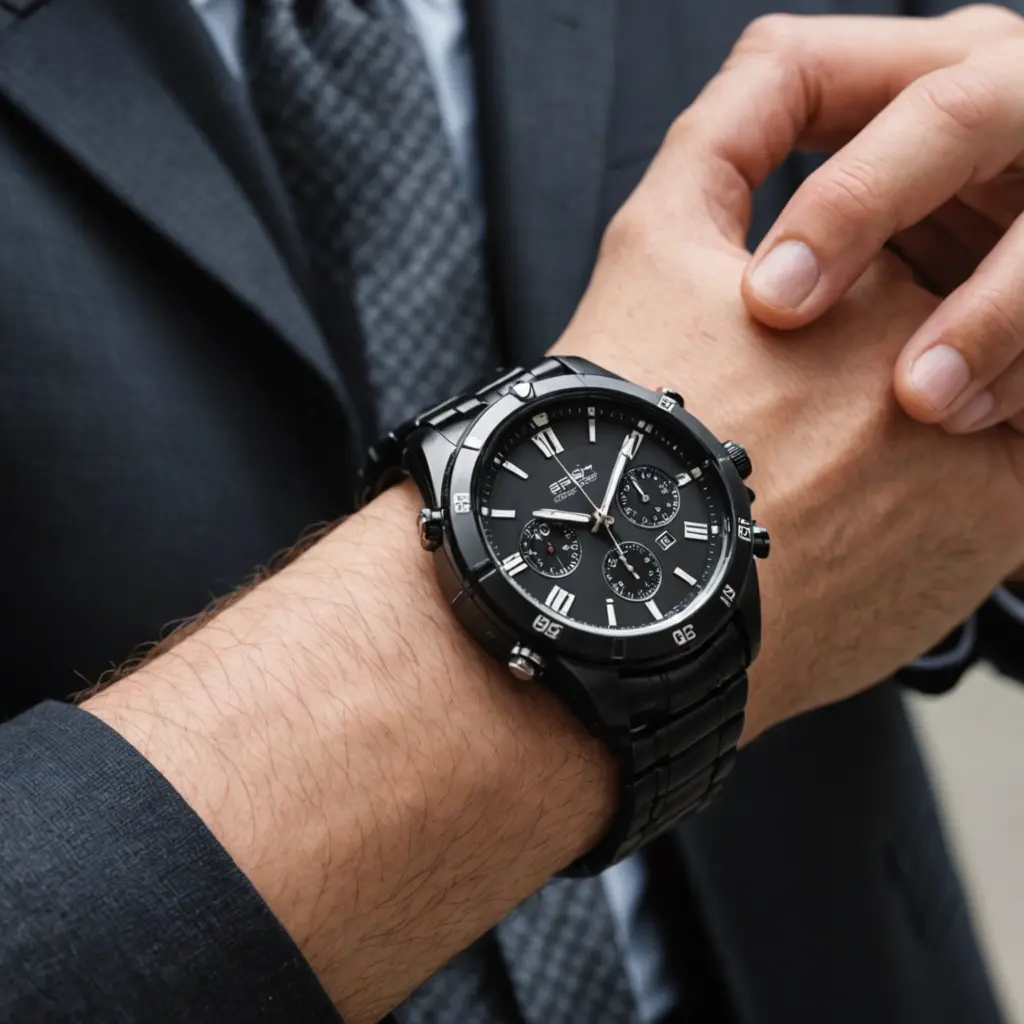

An HD spy camera watch combines the familiar shape of a wristwatch with a small camera and recording system. Its discreet design can be useful for legitimate documentation, personal safety, or security situations where a larger camera would be impractical. However, the device’s usefulness depends on more than video resolution. Battery life, storage, audio quality, low-light performance, and responsible handling of recordings all matter. Our HD watch review explains advanced surveillance features that enhance resolution, battery life, and discrete recording.
This guide explains how camera watches work, what to evaluate before buying one, and the privacy considerations that should shape how you use it.
How an HD camera watch works
A camera watch generally places a miniature lens behind the watch face or bezel. Inside the case are the components needed to capture and save footage, including a circuit board, microphone, battery, and internal or removable storage.
Many models record high-definition video, often at 1080p, while some products advertise higher resolutions. Available recording modes may include:
- Continuous recording: Captures video until the battery runs out or storage is full.
- Motion-triggered recording: Starts recording when movement is detected, which can help conserve battery power.
- Loop recording: Replaces older files when storage is full, allowing recording to continue.
Some camera watches also include Wi-Fi and a companion app. These features may allow you to change settings, view a live feed, or transfer files without removing a memory card. They can also add setup and security considerations, so remote access should not be treated as an automatic advantage.
Features worth comparing
Video and audio quality
Resolution is an important starting point, but it does not guarantee useful footage by itself. Lens quality, lighting, movement, and the camera’s exposure handling affect whether details can be seen clearly. If audio is important, check the microphone’s performance as well. Wind, distance, and surrounding noise can make recorded conversations difficult to understand.
Battery life
Recording video places a significant demand on a small battery. A watch may operate for only a limited period while actively recording, depending on its recording mode and features. Compare the stated runtime with your intended use, and look for practical options such as motion detection or power-saving settings. A device that cannot remain active for the required period may be less useful than one with a lower advertised resolution but better endurance.
Storage and file handling
Storage may be built in or expandable through a microSD card. Consider how much footage you need to retain and whether the watch uses loop recording. Before relying on a device, confirm how files are named, transferred, and played back. Preserve original files when footage may be needed for a complaint, investigation, or legal matter. For broader wearable imaging ideas, compare action camera photos with the watch’s discreet recording perspective.
Design and low-light performance
A discreet watch should be comfortable and reasonably convincing as an ordinary wristwatch. Examine the construction, controls, lens placement, and status indicators. Low-light or infrared features may improve recording in dim environments, but they should be tested in the conditions where the watch will actually be used.
Legitimate uses for a camera watch
A wristwatch camera may be considered for personal safety documentation, home-security observations, or recording an incident when carrying a conventional camera is inconvenient. In a business setting, it might help document suspected theft, harassment, or another workplace concern, provided the recording complies with applicable rules and workplace policies.
Parents and carers should be especially cautious. Recording people without their knowledge can create serious privacy and trust issues, and the legality of audio or video recording varies by location. A visible security system, written policy, or openly agreed recording arrangement may be more appropriate in many situations.
Privacy, legal, and ethical responsibilities
Before using a hidden camera watch, check the laws that apply where the recording will take place. Audio-recording requirements can differ by country, state, or region, and some situations require consent. Do not record in places where people reasonably expect privacy, such as bathrooms or changing areas. Such use is both intrusive and potentially unlawful.
Use recordings only for a legitimate, clearly defined purpose. Limit access to sensitive footage, store it securely, and avoid sharing it casually. If a recording may be used as evidence, keep the original file unchanged and document how it was created, transferred, and stored. This helps preserve its credibility and protects the privacy of everyone involved.
Buying checklist
- Choose recording quality appropriate to the situation rather than relying on resolution claims alone.
- Compare real recording time, charging arrangements, and motion-detection options.
- Check storage capacity, file-transfer methods, and playback compatibility.
- Assess microphone quality and performance in outdoor or noisy environments.
- Review low-light capability, build quality, comfort, and the visibility of indicator lights.
- If remote access is offered, examine the app, Wi-Fi requirements, and account-security controls.
- Read reviews focused on battery longevity, recording reliability, and software problems.
- Check the warranty and return policy before purchasing.
An HD spy camera watch can be a practical documentation tool when its capabilities match the situation and its use respects privacy. Treat video quality, battery life, storage, and legal compliance as equally important parts of the buying decision.