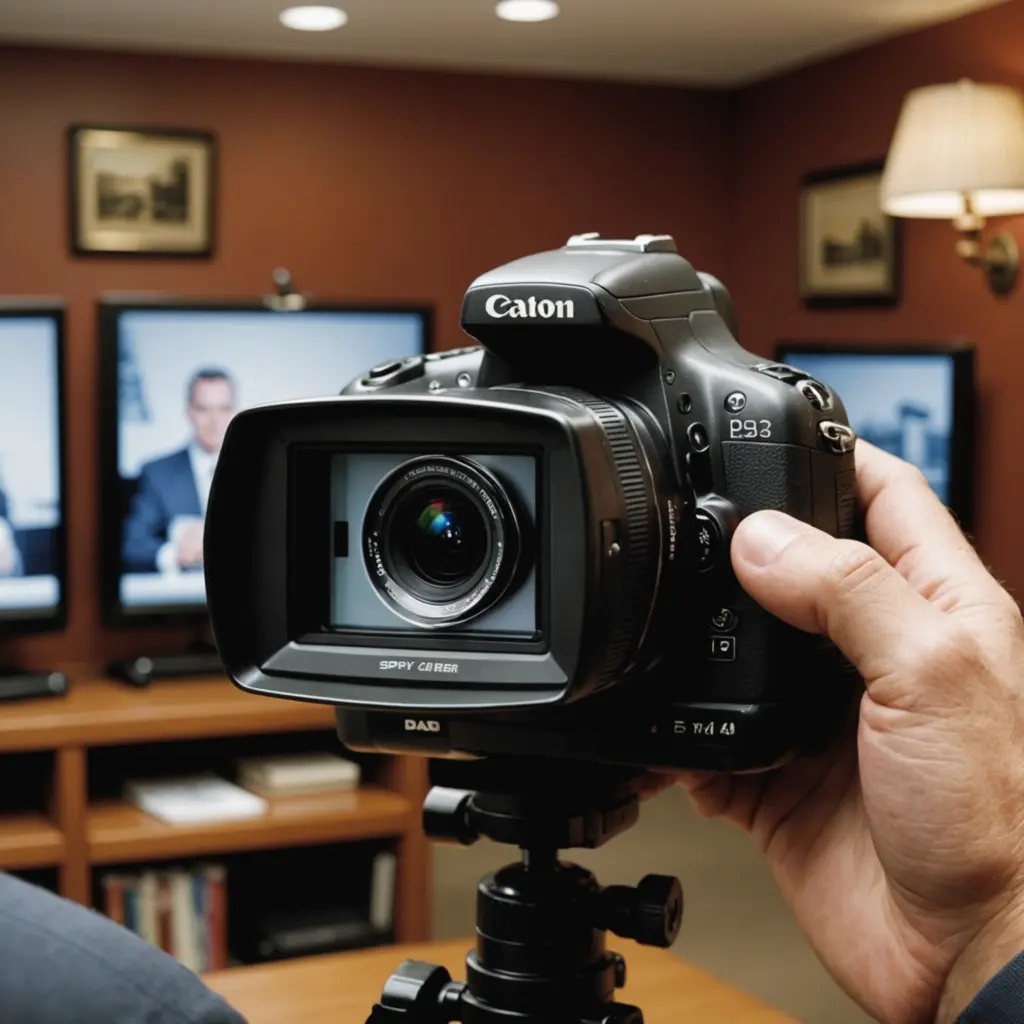

A television can provide an effective hiding place for a small camera because it is already a familiar object in homes, offices, shops, and shared spaces. A lens may be positioned behind the bezel, speaker grille, or another part of the casing, making the device difficult to notice during a casual inspection. However, using any concealed camera raises important questions about consent, privacy, security, and local law. Explore television concealment methods to understand how modern microelectronics and sensors enable covert recording inside TVs.
How a camera can be concealed in a television
A concealed television camera generally combines a small lens with a compact image sensor. The lens may be only a few millimetres across, while the surrounding components are placed inside the TV housing or within a modified external accessory. The visible opening may resemble a normal sensor, indicator, ventilation gap, or speaker detail.
Depending on the design, the camera may:
- Send video over a wireless network for live viewing
- Store recordings on internal memory or a memory card
- Use the television’s power supply or a separate rechargeable battery
- Record continuously or activate when movement is detected
Some devices are designed as independent cameras hidden inside or near a television rather than being part of the TV’s original electronics. A smart television with a built-in camera is not automatically a covert camera; the key issue is whether the camera is disclosed, accessible to the owner, and used with appropriate consent.
Common features
The capabilities of a camera concealed in a television can vary widely. Some models offer basic local recording, while others include features commonly associated with modern security cameras.
Video and low-light recording
Image quality depends on the sensor, lens, lighting, and placement. Higher-resolution sensors can produce more detail, but resolution alone does not guarantee a useful image. Low-light models may use infrared illumination, which can support recording in darkness while remaining difficult to see with the naked eye.
Motion detection and alerts
Motion detection can reduce the amount of stored footage by starting a recording only when activity is detected. Network-connected devices may also send an alert to an application. These functions can be useful for authorized security monitoring, but they increase the privacy impact because people may be recorded without realizing it.
Audio and remote access
Some systems include microphones, speakers, two-way communication, live streaming, or cloud storage. Audio is particularly sensitive: recording private conversations may be subject to stricter rules than recording images. Any network-connected device should use strong authentication, secure settings, and up-to-date software where those protections are available. For a more flexible alternative to a hidden camera in a TV, explore WiFi smart monitoring options.
Legitimate uses and important limits
Discreet monitoring may have a legitimate purpose in an authorized security system, such as protecting property or observing activity in an area where recording is legally permitted. A less visible design may also be chosen for aesthetic reasons when a conventional security camera would be unsuitable.
That does not make covert recording acceptable in every situation. Bedrooms, bathrooms, changing areas, and other private spaces commonly carry a strong expectation of privacy. Recording employees, tenants, visitors, children, caregivers, or customers without the required notice or consent may violate privacy, employment, housing, or surveillance laws. Rules differ by location, particularly for audio recording and recording shared spaces.
Before installing or using a concealed camera, establish a specific safety or security purpose, check applicable law, provide notice when required, and restrict access to authorized people. Keep recordings only as long as necessary and avoid collecting audio or video that is unrelated to the stated purpose.
How to check a television for a hidden camera
If you suspect that a TV has been modified, begin with a careful visual inspection. Look for unexplained pinholes, unusual gaps, mismatched trim, fresh adhesive, loose panels, or components that do not match the rest of the television. Pay particular attention to the bezel, speaker openings, indicator lights, and any decorative features facing the room.
A flashlight held at different angles may reveal a small lens reflection. You can also review the TV’s settings and connected-device list for unfamiliar cameras, applications, or network connections. These checks are not conclusive: a camera may record locally, remain inactive, or use a connection that is difficult to identify.
Radio-frequency detection equipment may help locate an active wireless transmitter, but it can produce false positives from ordinary Wi-Fi devices, phones, routers, and other electronics. If you find a suspicious modification, photograph it without dismantling the device, disconnect the television from power if it is safe to do so, and consider contacting a qualified technician or professional counter-surveillance service.
Reducing the risk of unauthorized surveillance
- Limit who can access rooms and appliances.
- Use reputable technicians for television repairs, installation, and replacement.
- Inspect unfamiliar electronics before placing them in private or sensitive areas.
- Secure home Wi-Fi with a strong password and review connected devices regularly.
- Cover or disable disclosed cameras when they are not needed.
- Document the purpose, location, access controls, and retention period for any authorized monitoring system.
A hidden camera in a TV illustrates how easily familiar consumer equipment can be adapted for surveillance. Understanding the technology can help with legitimate security planning, but privacy and consent should remain the starting point. When the purpose cannot be justified, the people affected cannot be informed, or the legal position is unclear, recording should not proceed.