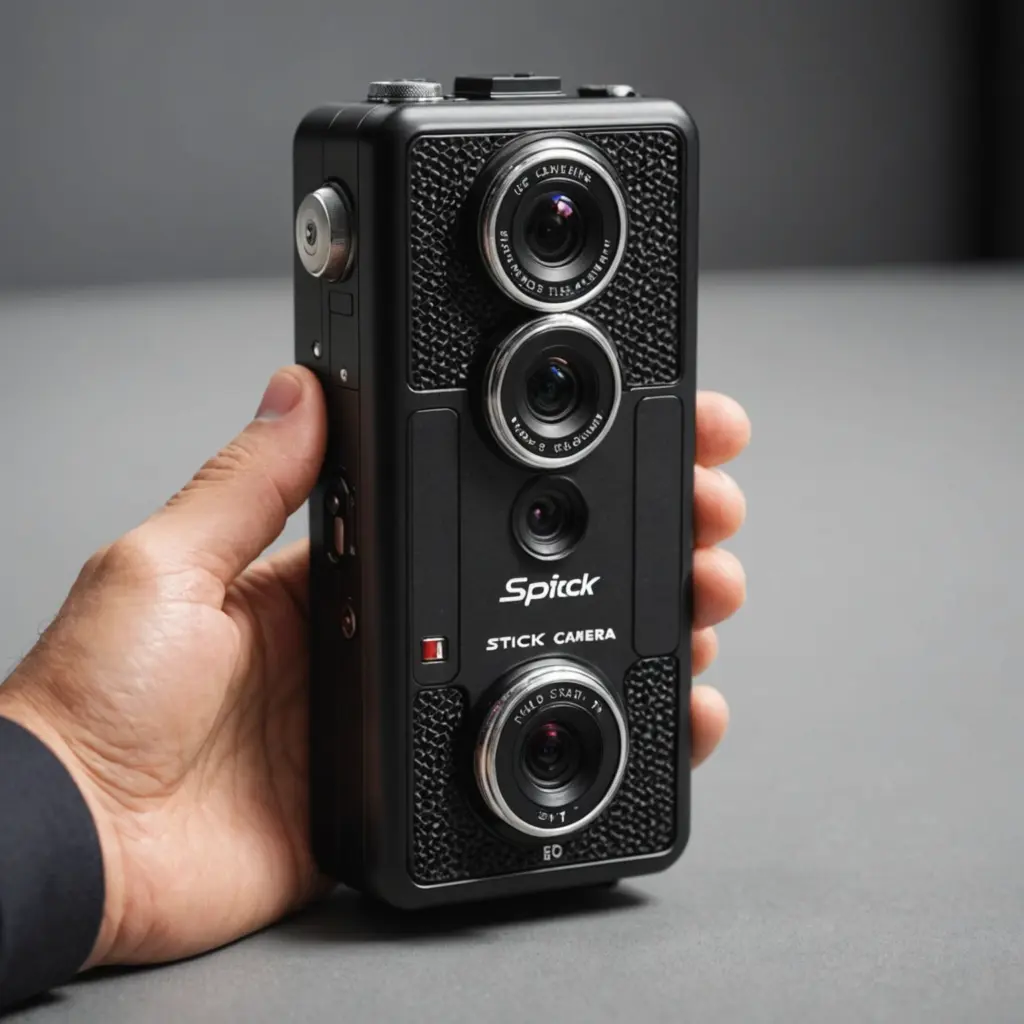

A stick video camera combines a compact camera body with a narrow, extended, or mountable form factor. Depending on the design, it may be attached to a pole, worn on headgear, or placed in a confined area that would be difficult to reach with a conventional camera. This makes the format useful for inspections, hands-free documentation, outdoor recording, and some security applications. Explore stealth recording features to optimize a stick video camera’s concealment and recording performance.
The best choice depends less on the label “stick camera” than on the camera’s lens, power system, mounting method, storage options, and intended environment. A small body can be convenient, but it may also mean a smaller battery, limited controls, or reduced image quality. Comparing these trade-offs before buying helps ensure the device is suitable for the job.
How a stick video camera works
At the center of the device is a compact image sensor that converts light into video. The lens determines how much of the scene is visible and how close distant subjects appear. A wide-angle lens can cover more of an area, while a narrower lens may be better for focusing on a specific point. Lens choice also affects where the camera can be positioned and how much of the surrounding scene appears in the recording.
Video is usually saved to internal memory, a removable microSD card, or another connected storage system. Some models can also send a live view to a phone or other device through wireless connectivity. Streaming can be useful for monitoring, but it may consume more battery power and depend on a reliable connection. When recording sensitive material, storage security and access controls deserve as much attention as image quality.
Power and connectivity considerations
Battery capacity is one of the most important practical limitations. Continuous recording at a high resolution generally uses more power than scheduled, motion-triggered, or low-power recording. A rechargeable battery may be sufficient for short inspections or activities, while longer deployments may require a compatible external power source or a design with sleep and wake functions.
- Battery runtime: Check whether the stated operating time applies to continuous recording, standby, or a particular resolution.
- Charging: Consider charging time, connector type, and whether a spare battery or external power option is available.
- Wireless features: Wi-Fi or Bluetooth may support setup, remote control, live viewing, or file transfer, but can affect runtime.
- Data handling: Look for practical ways to copy, protect, and securely store recordings.
Common stick camera designs
Camera on a pole
A compact camera attached to a rigid or telescoping pole can reach behind equipment, above ceilings, into narrow openings, or around obstacles. The pole may be handheld or fixed to a support. A lightweight design is easier to carry, but excessive flexibility can make it harder to hold a steady view.
Head-mounted camera
A head camera records from a first-person perspective and leaves both hands available for work. It can document inspections, repairs, field activities, or other tasks where holding a camera would be inconvenient. Comfort, balance, mounting security, and stabilization are especially important because head movement can make footage difficult to watch. Explore waterproof stick options for reliable outdoor recording when your compact camera needs added protection.
Hybrid and flexible mounts
Some systems allow the same compact camera to be moved between a pole, helmet, handle, or fixed mount. This flexibility can be valuable when one device must serve several purposes, although every additional mounting option should remain secure and easy to adjust.
Where a stick video camera can help
These cameras are particularly useful when portability, reach, or hands-free operation matters. Possible applications include inspecting crawl spaces, vents, conduits, ceilings, and areas behind appliances; documenting building or electrical work; recording outdoor activities; and capturing viewpoints that are difficult to obtain with a standard handheld camera.
In security-related situations, a small camera may help assess a restricted or hard-to-reach area before someone enters it. However, it should not be treated as a substitute for proper safety procedures or professional equipment where hazards are present. For creative recording, an extended mount can provide low, elevated, or over-the-shoulder perspectives without requiring a large rig.
Features worth comparing
- Video resolution and frame rate: Higher settings can improve detail or motion clarity, but usually require more storage and power.
- Low-light performance: Sensor quality and any available illumination affect how useful the camera is in dim locations.
- Image stabilization: Stabilization can reduce shake during handheld, pole-mounted, or body-mounted recording.
- Construction: A rugged housing and suitable weather resistance matter for outdoor, industrial, or dusty environments.
- Viewing angle: Match the lens to the space rather than assuming a wider view is always better.
- Mounting system: Confirm that the pole, helmet, clamp, or other mount is compatible and secure.
- Controls and app support: Simple recording controls can be more valuable than complicated features during field work.
Privacy, consent, and responsible use
A compact or concealed camera can create significant privacy concerns. Rules governing video, audio, consent, and recording in private or public places vary by jurisdiction. Before recording, understand the applicable requirements and avoid filming areas where people reasonably expect privacy. Audio may be subject to separate restrictions from video.
Responsible use also means limiting recording to a legitimate purpose, notifying people when appropriate, and protecting footage from unnecessary access. Use strong device and account protections, store files securely, and establish a clear retention period when recordings are made for work or security purposes.
A stick video camera is most valuable when its form matches the task. Evaluate reach, mounting, battery life, low-light ability, stabilization, durability, and data security together rather than focusing on resolution alone. With careful selection and respectful use, this compact format can support practical inspections, hands-free documentation, outdoor recording, and carefully managed security work.