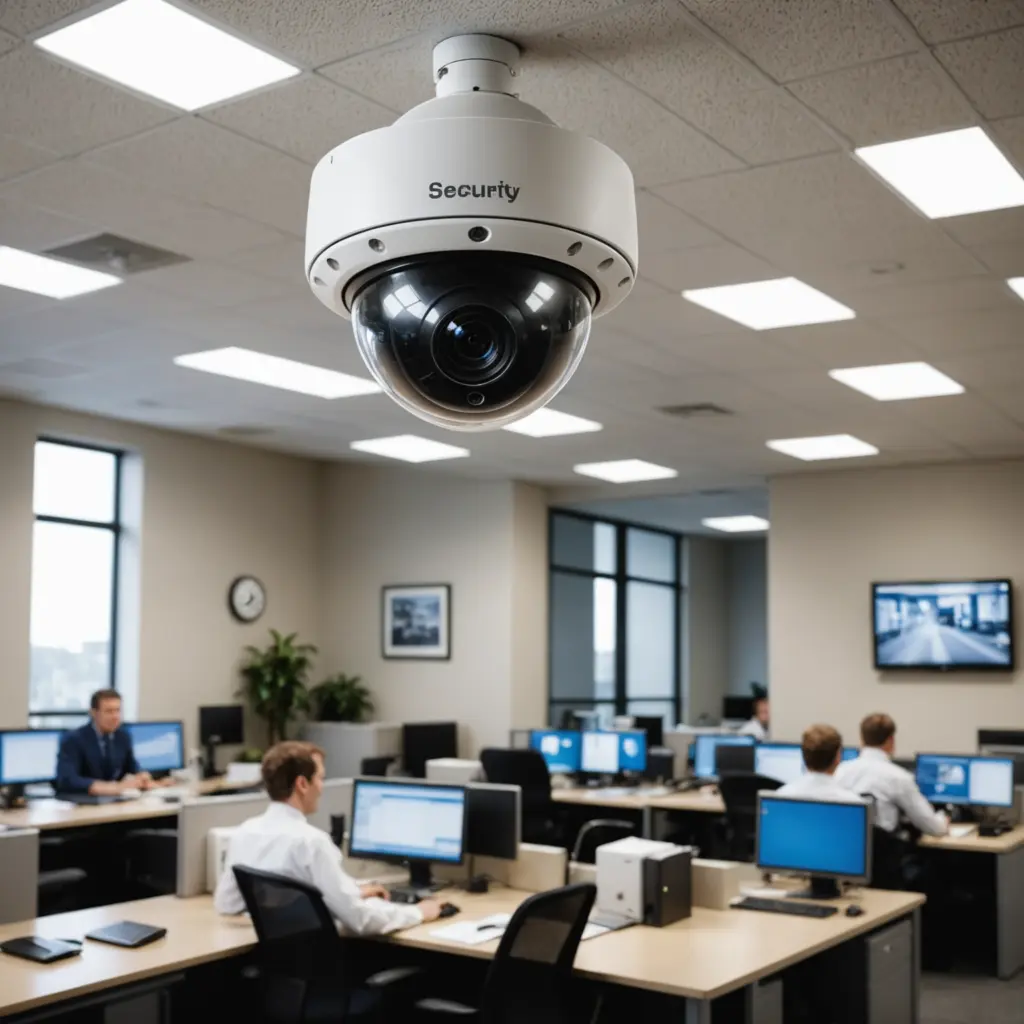

An office security camera can help protect people, property, confidential information, and day-to-day operations. A well-planned system may deter theft and vandalism, provide evidence after an incident, and help authorised managers understand what happened in restricted or high-risk areas. Explore discreet monitoring applications to understand how unobtrusive cameras can support office security in appropriate situations.
However, cameras are not a substitute for access controls, staff training, sound procedures, or effective supervision. The best results come from defining a clear security objective first and then choosing equipment, placement, storage, and policies that support that objective.
Why businesses use office security cameras
Office surveillance can support several legitimate business needs, including:
- Monitoring entrances, exits, and after-hours access
- Protecting equipment, stock, documents, and other valuable assets
- Investigating theft, vandalism, property damage, or unauthorised access
- Supporting workplace safety and emergency response
- Reviewing incidents connected with deliveries, visitors, or shared facilities
- Providing evidence for insurance claims or law enforcement investigations
Visible cameras can also reassure visitors and employees that security is being taken seriously. Their presence may discourage opportunistic misconduct, although businesses should avoid presenting surveillance as a complete solution to every security problem.
Choosing locations and coverage areas
Begin with a security assessment rather than installing cameras wherever wiring is convenient. Identify the areas where an incident would have the greatest impact or where access is difficult to verify. Common locations may include reception areas, entrances, loading points, corridors leading to restricted rooms, storage areas, server rooms, and mailrooms.
Camera placement should provide useful views without unnecessarily recording private activities. Avoid locations such as restrooms, changing areas, and other spaces where people have a strong expectation of privacy. Consider lighting, glare, obstructions, camera height, and whether the image will clearly show faces, access events, or relevant activity.
Wide-angle or broad-coverage cameras can reduce blind spots in suitable spaces, but a larger field of view may capture less detail at a distance. A security assessment should determine whether the priority is identifying people, observing movement, reading access events, or monitoring a particular asset.
Visible and covert surveillance
Most office systems should be openly installed and supported by a clear workplace policy. Covert cameras have narrower applications and should not be treated as a routine replacement for transparent security measures. A discreet camera might be considered for a specific, documented investigation when there is a legitimate business concern and ordinary methods are inadequate.
Any concealed deployment requires particular care. The purpose, location, duration, authorised viewers, and handling of recordings should be defined in advance. Secret monitoring should never be used to record private spaces or to conduct broad, indefinite observation. Legal advice may be necessary before proceeding.
Privacy, consent, and legal responsibilities
Surveillance rules vary by jurisdiction and may depend on the type of workplace, the location of the camera, and whether audio is recorded. Video recording in private areas is commonly restricted, while audio recording may require consent from one or more people. Data protection requirements can also affect notification, access requests, security controls, and retention periods. For stronger office monitoring, consider smart camera installation to improve coverage, alerts, and system reliability.
Before installation, the business should establish:
- The legitimate purpose for each camera
- Which areas will be recorded and which will be excluded
- How employees, contractors, and visitors will be informed
- Who may view live feeds or exported footage
- How long recordings will be retained and when they will be deleted
- How footage will be preserved if it relates to an investigation
Local legal and employment advice is important, especially for covert monitoring, audio recording, and systems operating across multiple locations.
Installation and cybersecurity best practices
Network-connected cameras should be treated as business technology, not as simple plug-in devices. Change default credentials, use strong unique passwords, apply firmware updates, and restrict administrative access. Where available, use encryption and separate the camera system from other sensitive business networks. Keep a record of authorised users and review permissions periodically.
Decide whether recordings will be stored on a local recorder, a managed cloud service, or another controlled system. Each option requires appropriate physical and digital protection. Storage capacity, backup needs, retrieval speed, and the organisation’s retention policy should all be considered before deployment.
Maintenance and responsible monitoring
A camera that is dirty, misaligned, poorly lit, or no longer recording cannot provide dependable evidence. Schedule checks for lens condition, image quality, timestamps, connectivity, storage capacity, and recording integrity. Test any alerts or backup procedures regularly.
Access to footage should be limited to people with a defined business need. Maintain access logs where possible, and document the reason for exporting or sharing recordings. Managers should use footage as one source of information rather than assuming that a short video clip explains an entire event.
Building trust around workplace surveillance
Clear communication can reduce confusion and concern. Explain what the cameras are for, which areas are covered, how recordings are protected, and who can access them. Avoid collecting more information than the security purpose requires, and review the system periodically to confirm that each camera remains necessary.
Used proportionately, an office security camera system can strengthen physical security, support incident investigations, and improve accountability. Its value depends on thoughtful placement, secure operation, lawful data handling, and a workplace culture that treats surveillance as a focused security measure rather than unrestricted employee monitoring.